
Product Updatespublished on May 31, 2026
AI Detection API Implementation Guide
Start with the review decision
An API implementation should begin with the decision workflow, not the endpoint. Define what happens when a document is low risk, high risk, or inconclusive before storing any result.
Use AI detection API resources, developer API guidance, and enterprise AI detection workflows to plan the integration.
Implementation pattern
Assign a document ID. Send text for detection. Store the risk band and confidence with a timestamp. Route high-risk or low-confidence documents to a reviewer queue. Add reviewer notes, decision status, and retention rules. Avoid exposing raw text to users who do not need it.
Operational checklist
Test invalid inputs, long documents, retries, and duplicate submissions. Monitor latency and failure rate. Keep policy labels separate from detector scores so teams can update governance without changing the model integration.
FAQ
What should developers log?
Log the document identifier, request time, risk band, confidence, reviewer status, and policy outcome. Avoid logging more raw text than the workflow truly needs.
How should failures be handled?
Use retries for transient failures, preserve idempotency for duplicate submissions, and route unresolved cases to manual review instead of silently approving them.
Frequently Asked Questions
How do I choose the risk band thresholds for an AI detection API?
Start by mapping your detector's confidence scores to three actions: auto-approve, auto-flag, and manual review. Calibrate the thresholds against a labeled sample of your own documents, then tune the inconclusive band so reviewer volume stays manageable.
Should I store the raw text submitted to the AI detection API?
Store only what your workflow and audit requirements genuinely need, since raw text often contains sensitive content. In many cases keeping the document ID, risk band, confidence, and reviewer decision is enough, and raw text can be retained briefly or excluded entirely.
How do I handle duplicate or retried submissions safely?
Use an idempotency key tied to the document ID so repeated submissions return the original result instead of creating duplicate records. Reserve retries for transient errors like timeouts, and route anything still unresolved to manual review rather than auto-approving it.
Why keep policy labels separate from the detector's confidence score?
The detector score reflects the model's signal, while policy labels reflect your organization's governance decisions, and the two change for different reasons. Keeping them separate lets teams update policy rules without re-integrating or re-deploying the detection model.
Share
Related Posts
Product Updates
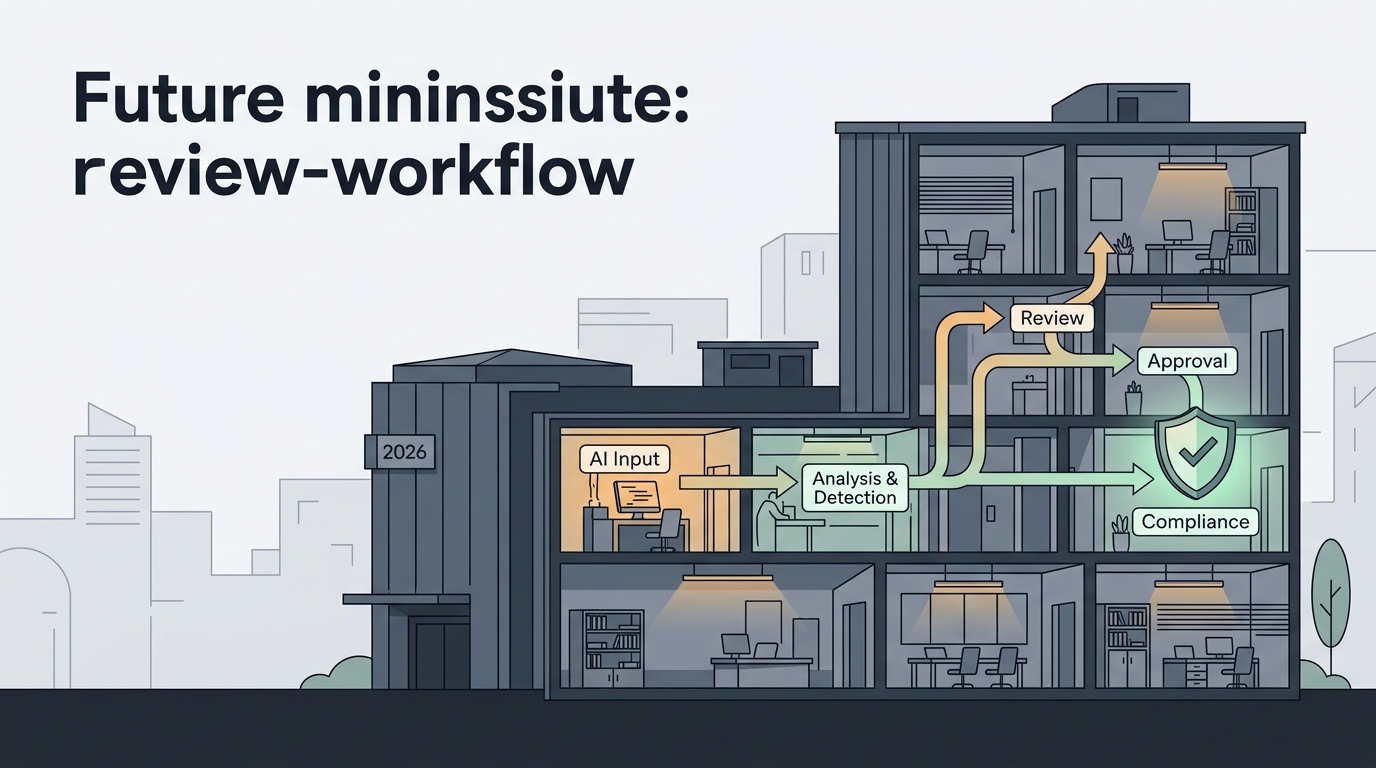
A practical 2026 guide for businesses reviewing AI-assisted reports, marketing content, hiring documents, and compliance-sensitive writing.
May 31, 2026
Product Updates
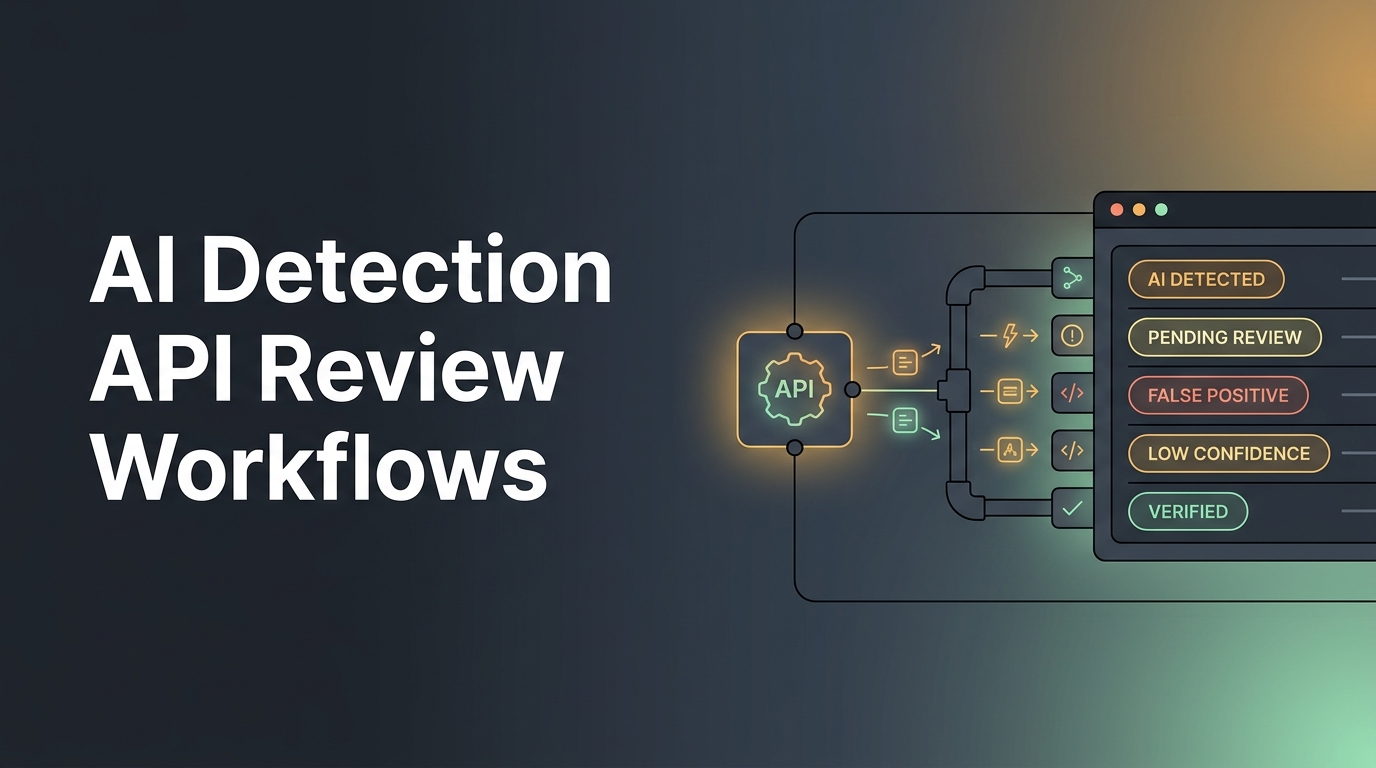
How teams can use an AI detection API to review submissions, route risky documents, and keep audit trails for integrity decisions.
May 31, 2026

Product Updates
The GPTZeroAI blog now focuses on AI detection, responsible writing workflows, academic tools, and product updates.
May 30, 2026