Product Updatespublished on May 31, 2026
AI Detection for US Businesses in 2026
Why businesses need AI detection workflows
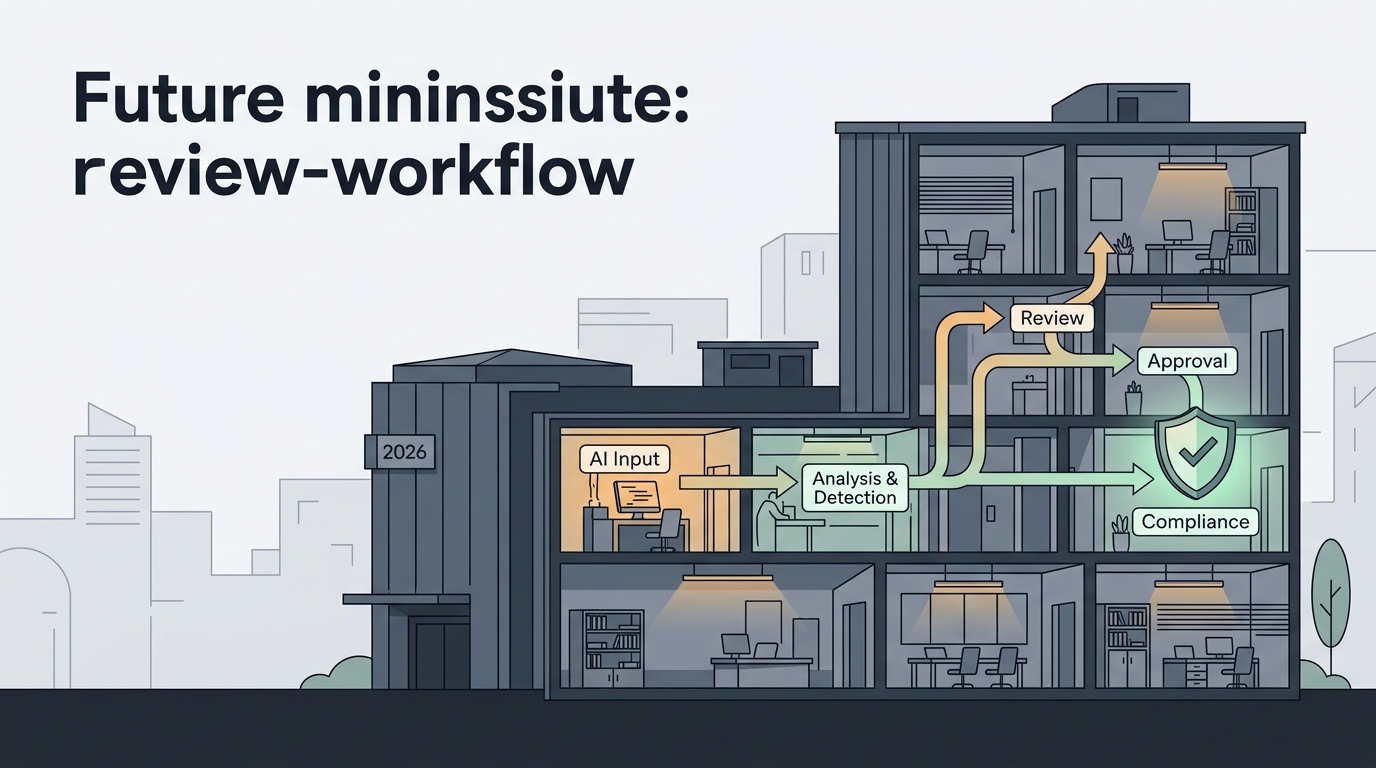
AI writing now appears in marketing drafts, HR documents, reports, support content, and vendor submissions. Businesses need a review process that protects quality without creating unfair or inconsistent decisions.
The strongest starting point is a documented enterprise AI detection workflow tied to API resources and security resources.
Where to use detection
Teams can review high-impact content before publication, audit outsourced drafts, route compliance-sensitive documents, and keep records when AI-writing risk affects business decisions. Detection should be paired with reviewer notes and policy status.
What to avoid
A business should not claim that one score proves misconduct or authorship. Instead, the workflow should explain risk, show evidence, and define what happens next.
FAQ
Do businesses need an AI detector?
Businesses that publish content, review sensitive documents, or rely on outsourced writing benefit from a consistent AI detection workflow.
Is API integration necessary?
Not for every team. API integration matters when review volume is high or when results must be stored with audit records.
Frequently Asked Questions
How accurate is AI detection for business documents?
Modern detectors are reliable indicators of AI-writing risk rather than proof of authorship, and accuracy is highest on longer, unedited text. Treat a high score as a signal to investigate, not a verdict, and always pair it with human review.
Can employees be disciplined based on an AI detection score alone?
No. A score is evidence of risk, not misconduct, so any HR or compliance action should combine the result with reviewer notes, context, and your written policy. Using a single score as a final judgment exposes the business to unfair-decision and legal risk.
How should a small business start an AI content review workflow?
Begin by defining which documents are high-impact, such as published marketing, vendor submissions, and compliance-sensitive reports, then run those through detection before approval. You can start manually and add API integration later once review volume grows.
Does AI detection work on edited or partially AI-written content?
Detection becomes less certain when AI text is heavily edited or mixed with human writing, which is why scores should be read as probabilities. For mixed content, focus on flagged passages and use reviewer judgment rather than the overall percentage alone.
Share
Related Posts
Product Updates
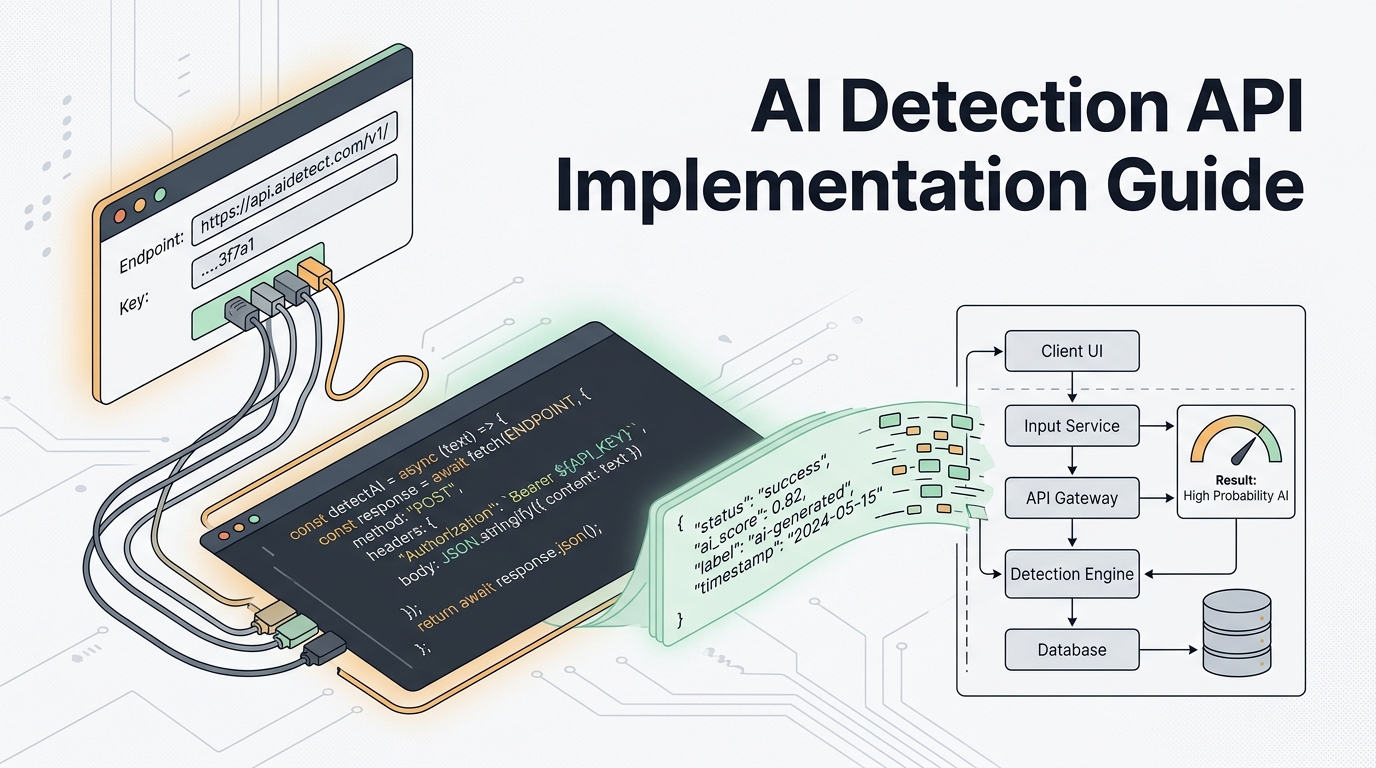
A developer-oriented guide to implementing AI detection API workflows with document IDs, risk routing, reviewer queues, and audit records.
May 31, 2026
Product Updates
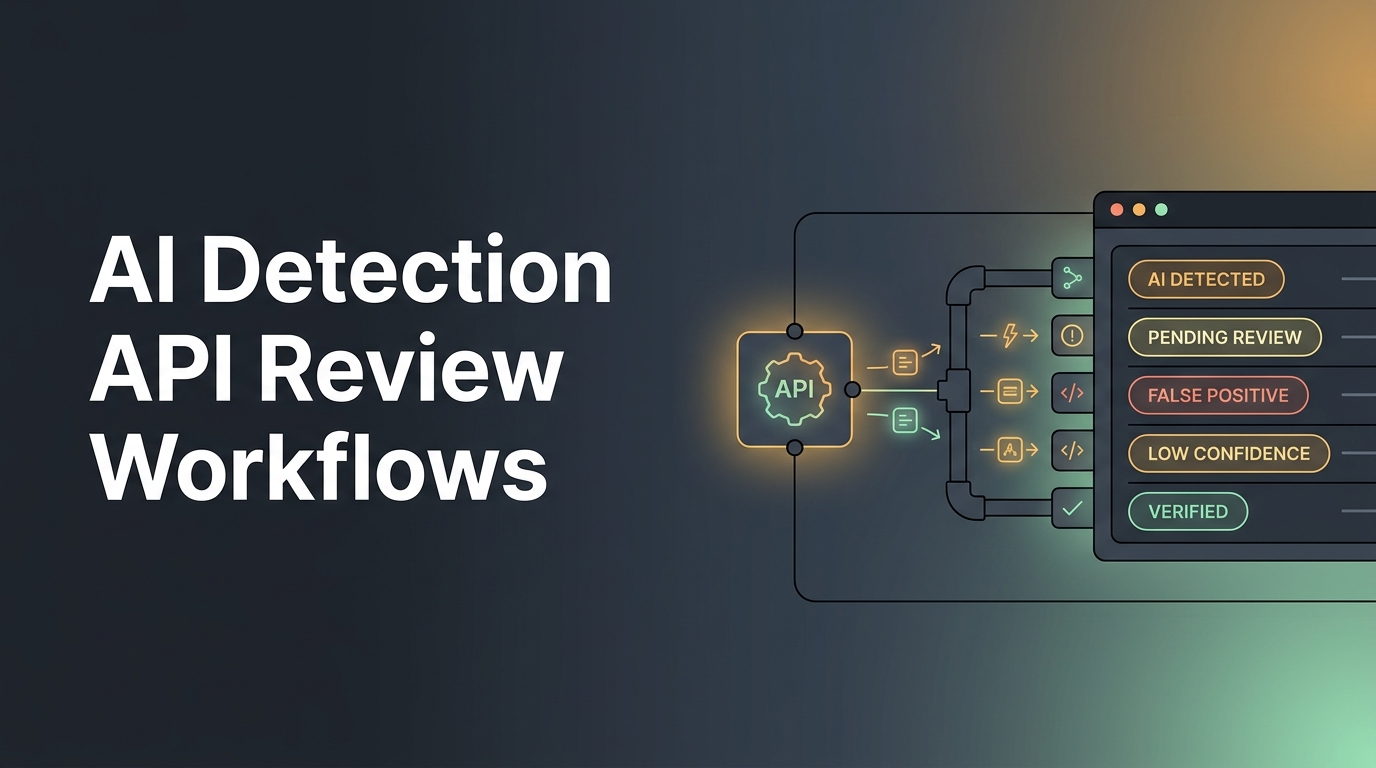
How teams can use an AI detection API to review submissions, route risky documents, and keep audit trails for integrity decisions.
May 31, 2026
Product Updates
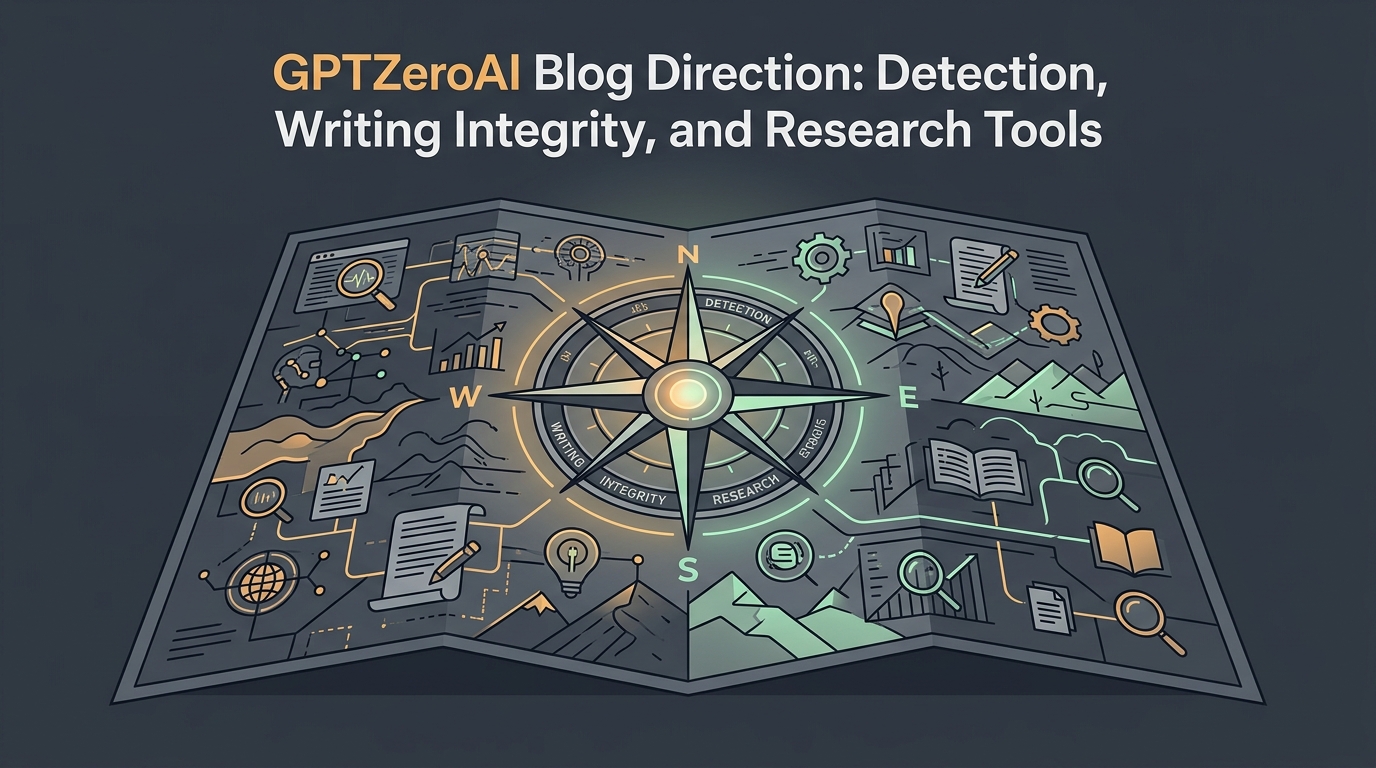
The GPTZeroAI blog now focuses on AI detection, responsible writing workflows, academic tools, and product updates.
May 30, 2026