Product Updatespublished on May 31, 2026
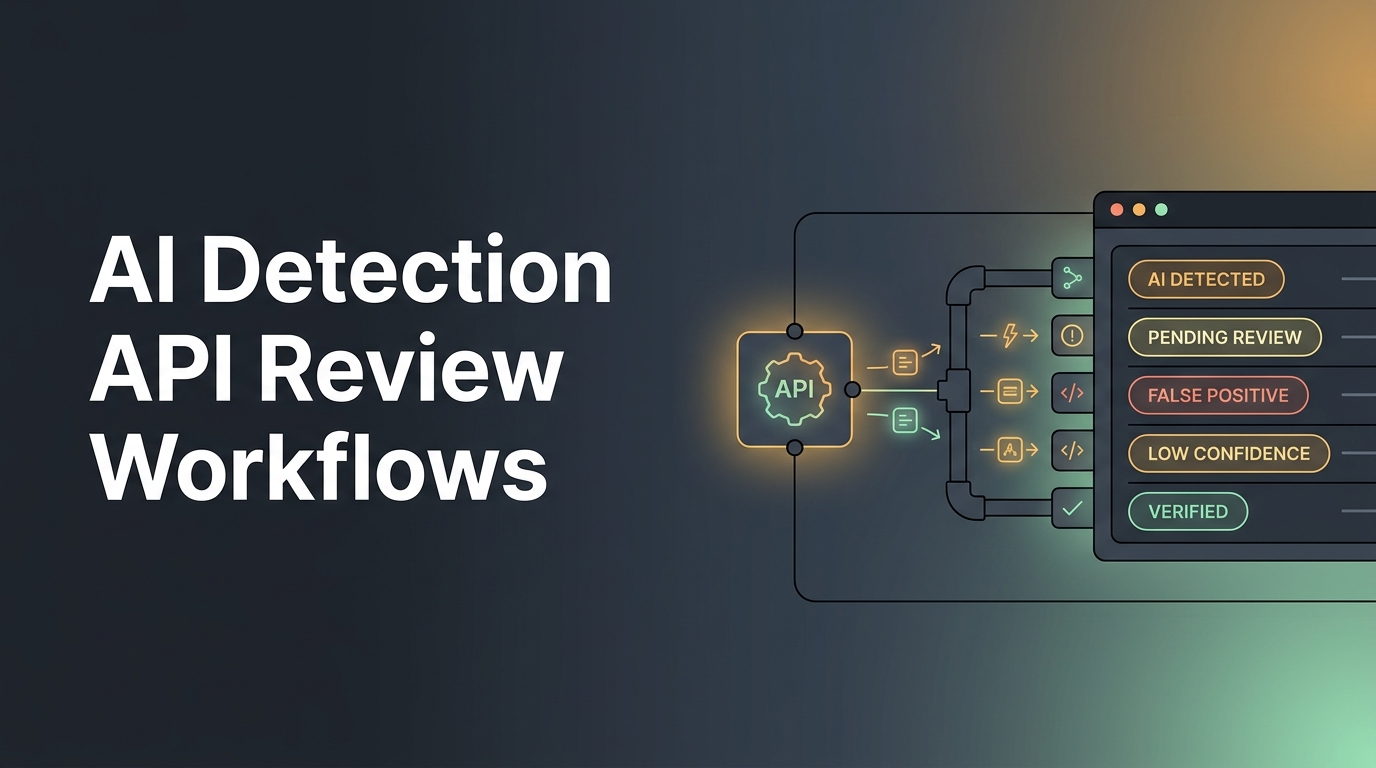
AI Detection API Review Workflows
Why API workflows need more than a score
An AI detection API is most useful when it fits an existing review process. Teams need submission intake, risk routing, reviewer notes, retention rules, and audit history. A raw score without workflow context is hard to act on consistently.
Start with the AI content detector API, then review developer-oriented details at AI detector API for developers. Teams with strict data requirements should also review secure AI detection platform.
Recommended review pattern
Send each document for detection, store the result with a document ID, and route only high-risk or low-confidence cases to human review. Add reviewer notes, decision status, and any student, author, or employee response. This turns detection into an auditable integrity workflow.
Privacy and governance
Limit stored text where possible, control access by role, and define retention windows. For schools, publishers, and enterprises, privacy controls can matter as much as model quality because review workflows often handle sensitive writing.
FAQ
What should an API response include?
At minimum, include a document identifier, score or risk band, confidence, reviewed text range, timestamp, and enough metadata to reproduce the review path. Teams may also need reviewer fields and policy status.
Should every result go to a human?
No. Route high-risk, low-confidence, or policy-sensitive cases to review. Clear low-risk cases can be logged without slowing the workflow.
How should teams manage retention?
Define what text is stored, who can access it, and when it expires. Shorter retention and role-based access usually reduce privacy risk while preserving audit needs.
Frequently Asked Questions
How do I integrate an AI detection API into an existing review tool?
Call the AI detection API at submission intake, store the returned document ID and score alongside your existing record, and trigger your routing logic from the response. Most teams add it as a webhook or a synchronous step in their submission pipeline so no extra portal is required.
What confidence threshold should trigger human review?
There is no universal number, but many teams send anything in a middle band of confidence plus all high-risk results to a reviewer. Calibrate the threshold against your own false-positive tolerance, since over-routing slows teams down and under-routing misses cases.
Does using an AI detection API mean storing student or author text long term?
No. You can detect a document and keep only the score, document ID, and metadata while discarding or short-retaining the raw text. Role-based access and short retention windows usually satisfy audit needs without holding sensitive writing indefinitely.
How do I keep an audit trail for integrity decisions made through the API?
Log each detection result with a timestamp, document ID, reviewer notes, and final decision status so the full review path is reproducible. This record lets you defend a decision later and review patterns across submissions.
Share
Related Posts
Product Updates
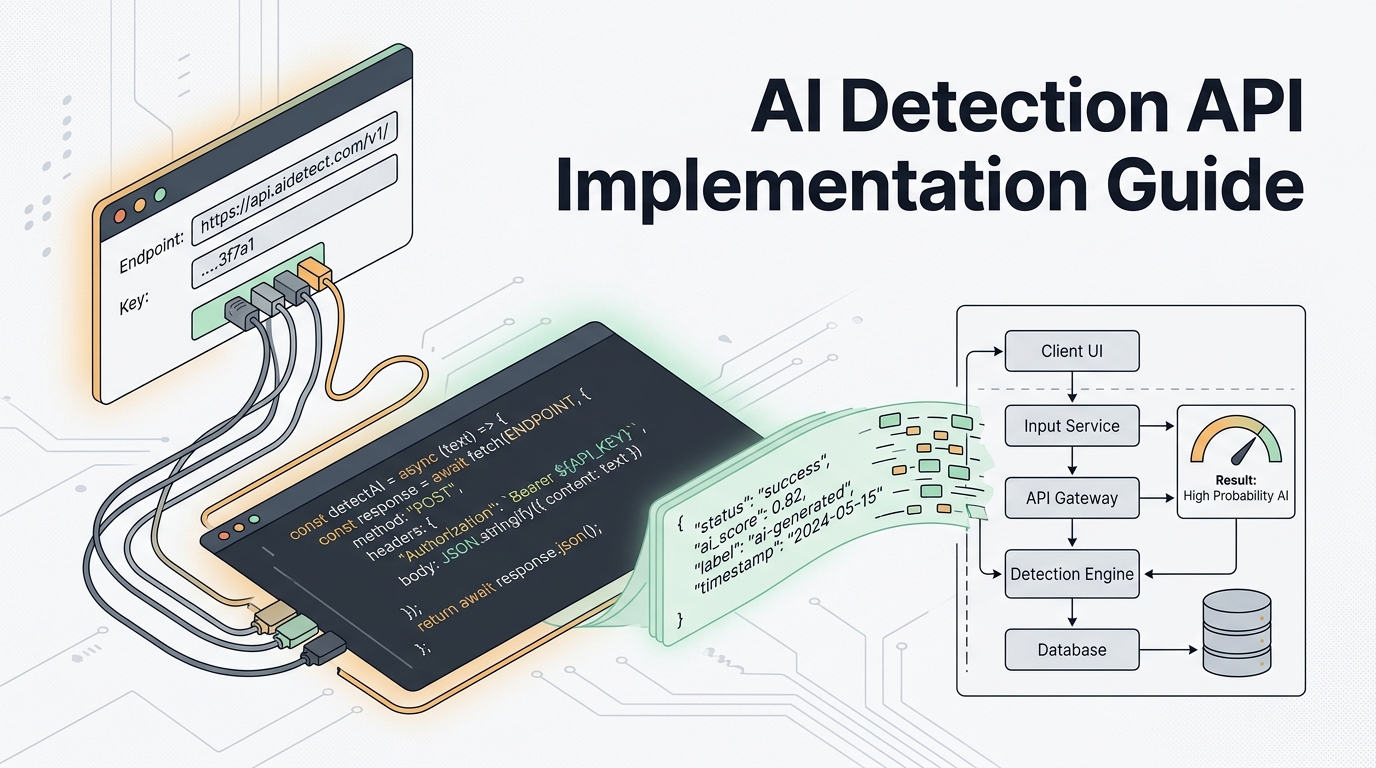
A developer-oriented guide to implementing AI detection API workflows with document IDs, risk routing, reviewer queues, and audit records.
May 31, 2026
Product Updates
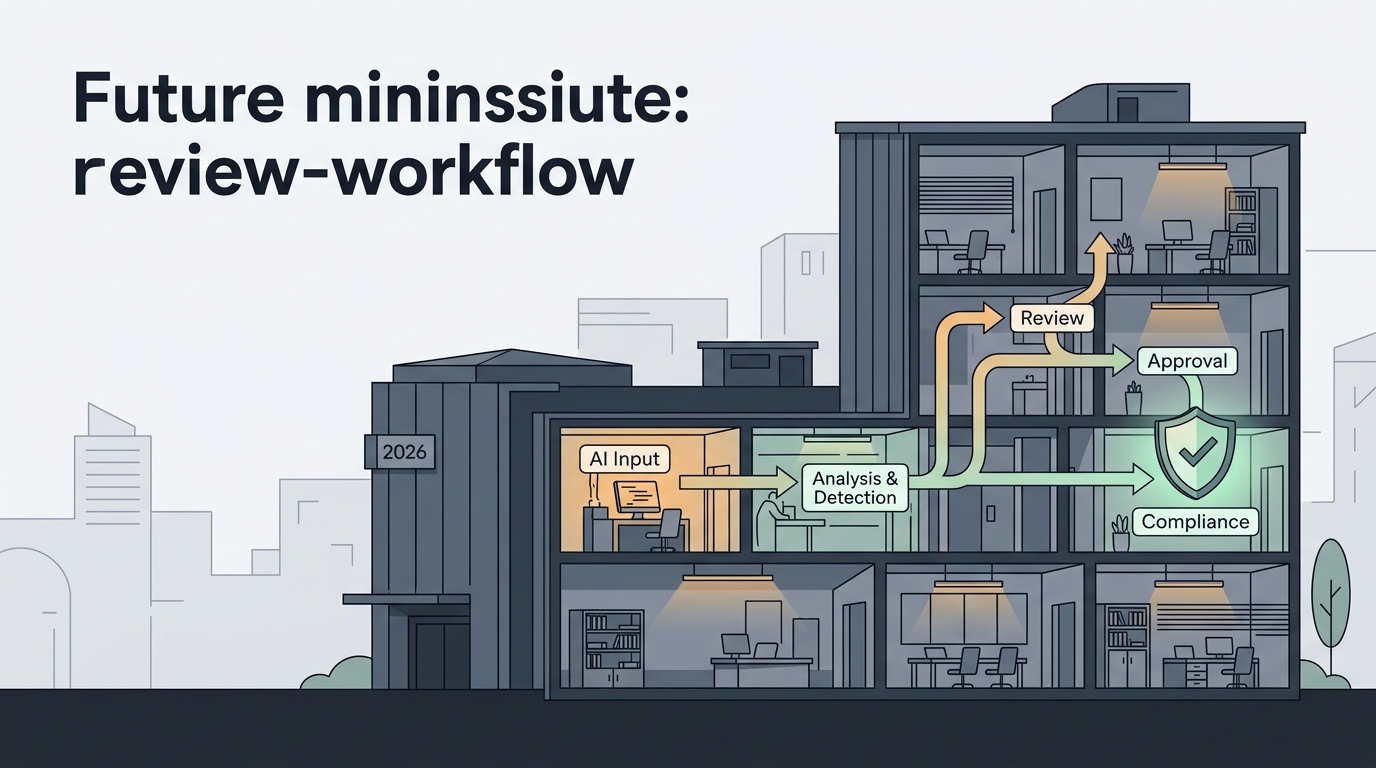
A practical 2026 guide for businesses reviewing AI-assisted reports, marketing content, hiring documents, and compliance-sensitive writing.
May 31, 2026
Product Updates
The GPTZeroAI blog now focuses on AI detection, responsible writing workflows, academic tools, and product updates.
May 30, 2026