Writing Integritypublished on May 30, 2026
False Positives in AI Detection: What Reviewers Should Check
False positives are one of the most important risks in AI detection. Clear, formal, or heavily edited human writing can sometimes look similar to generated text.
Common causes
Template-based writing, strict academic style, translation, grammar correction, and short samples can all reduce natural variation. Reviewers should mark these factors before escalating.
What to verify
- Look for drafts or revision history.
- Check whether citations and source details are specific.
- Ask whether the text was translated or edited with assistance.
- Use sentence-level evidence instead of one score.
GPTZeroAI should support a documented review process, not a shortcut around human judgment.
How to reduce false-positive risk
False-positive review should start with the text itself, but it should not stop there. Compare the result with the false-positive guidance page, check whether the sample is long enough, and ask whether the author used translation, grammar correction, or structured templates.
Evidence to collect before escalation
- Earlier drafts or version history.
- Source notes, citations, and prompt requirements.
- Examples of the same author writing in another setting.
- A short reviewer note explaining the final decision.
Frequently Asked Questions
What is a false positive in AI detection?
A false positive is when an AI detector flags genuinely human-written text as machine-generated. It usually happens when the writing is unusually polished, formal, templated, or short, which reduces the natural variation detectors look for.
Why does polished or edited human writing get flagged as AI?
Heavy editing, grammar correction, translation, and strict academic or template styles smooth out the sentence-length and word-choice variation that signals human authorship. With less natural variation, the text can statistically resemble generated content.
How can I prove my writing is human if it is wrongly flagged?
Collect supporting evidence such as earlier drafts, version history, source notes, and citations, and point to examples of your writing in other settings. This documentation is far stronger proof than any single detection score.
Should an AI detection score alone be used to make a decision?
No. A score is one signal, not a verdict, and it should never be a shortcut around human judgment. Use sentence-level evidence, check sample length, and document your reasoning before escalating any case.
Share
Related Posts

Writing Integrity
Google does not penalize content for being AI-assisted. It rewards helpful, original work and demotes thin, unedited output. Here is what actually matters.
Jun 24, 2026
Writing Integrity
Whether AI writing counts as cheating depends on disclosure, policy, and how the tool is used. A balanced guide for students and educators.
Jun 24, 2026
Writing Integrity
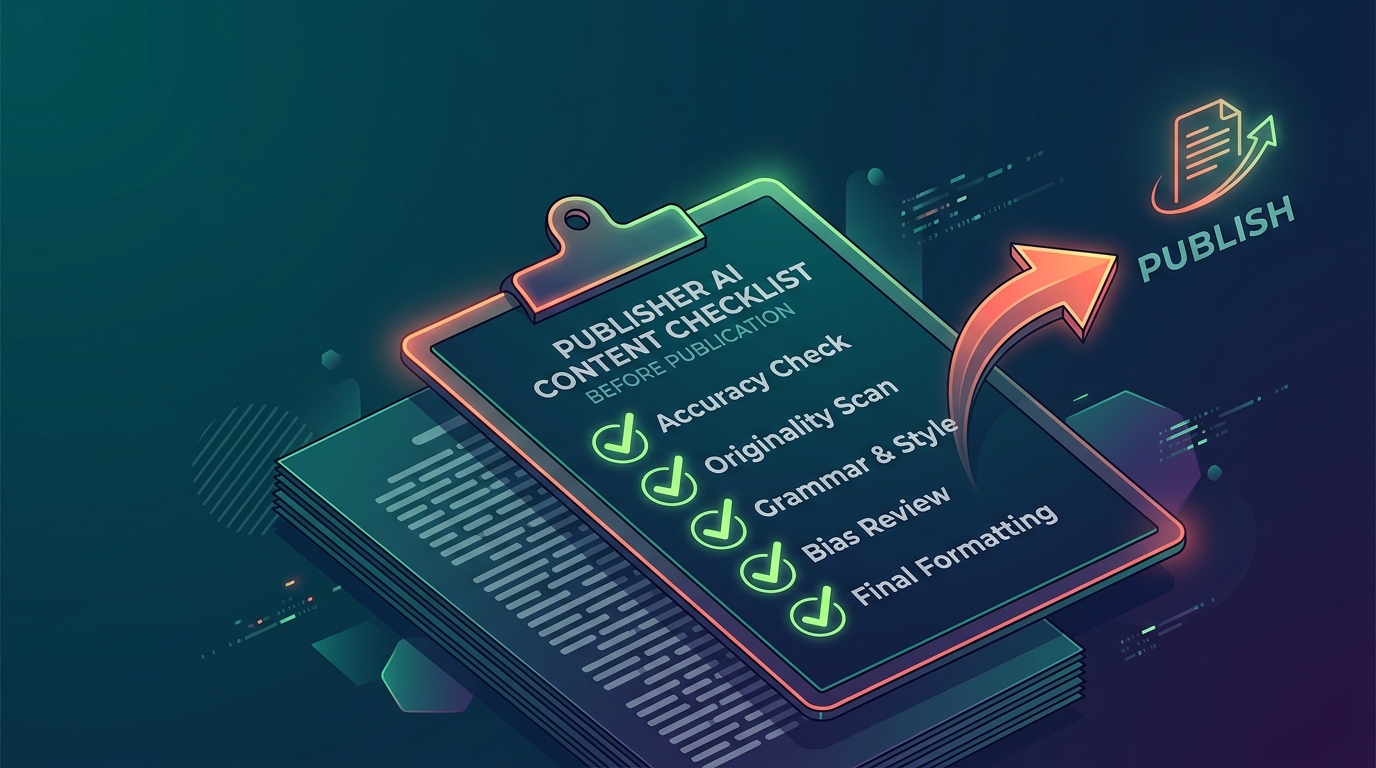
A pre-publication checklist for publishers reviewing AI-assisted drafts, sources, author disclosure, originality, and editorial quality.
May 31, 2026