Research & Citationpublished on Jun 24, 2026
How to Cite AI Tools (APA, MLA, and Chicago)
If you used an AI tool to brainstorm, draft, translate, or summarize, the responsible move is to disclose and cite it. Most major style guides now treat generative AI as a citable source. Below are the current formats for APA, MLA, and Chicago, plus practical rules for getting them right.
When You Actually Need to Cite AI
Cite the tool whenever its output appears in your work or shaped your reasoning in a meaningful way. That includes generated text you quote or paraphrase, code, images, and even substantial editing suggestions. Always check your instructor's or publisher's policy first, since some settings restrict AI use entirely regardless of citation.
What to record before you write
- The tool name and the company that makes it (for example, ChatGPT by OpenAI).
- The exact version or model and its date.
- The prompt you used and the date you accessed it.
- A saved copy or link to the conversation, since AI output is not reproducible.
APA Style (7th Edition)
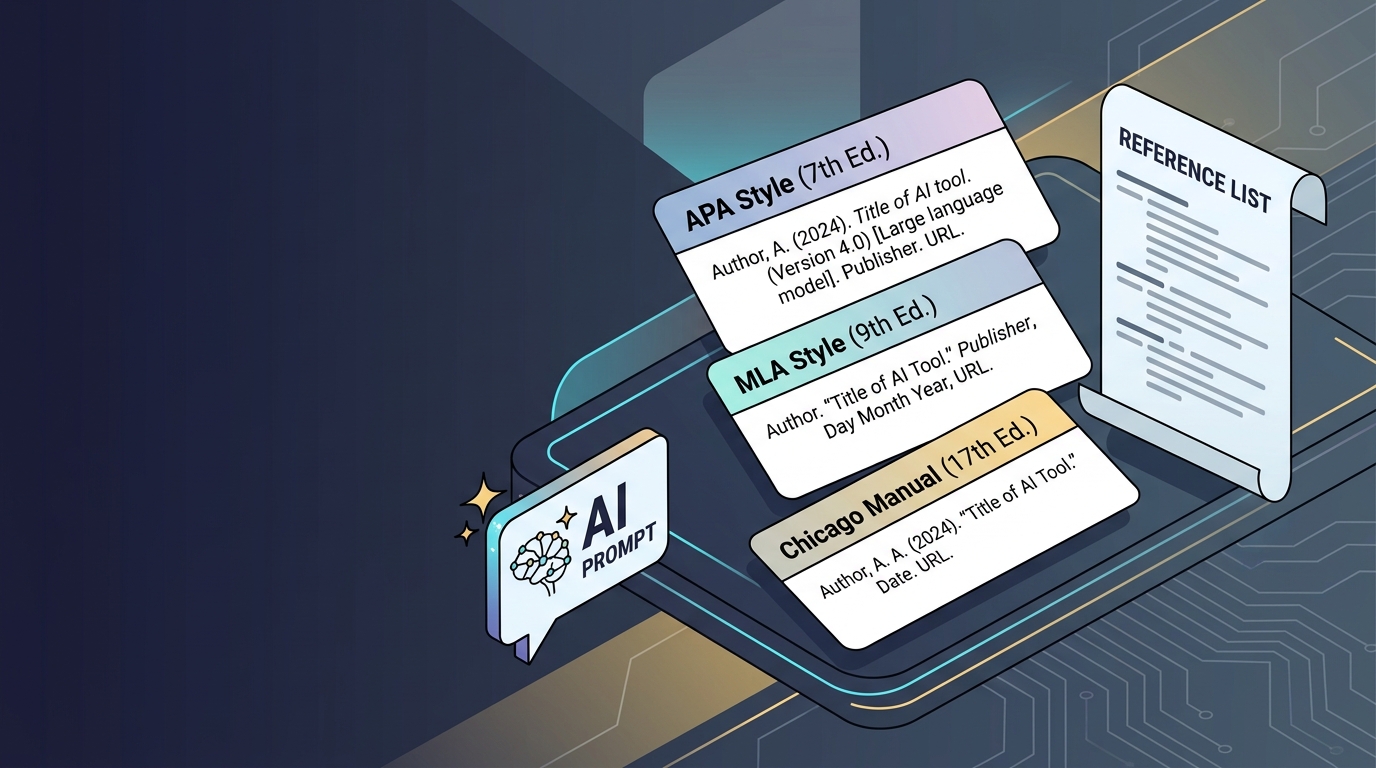
APA treats the AI as the author by way of the company. Use the format Author. (Year). Title of tool (Version) [Large language model]. URL. Describe the prompt in your text and place the full output in an appendix if needed.
Reference example:
OpenAI. (2025). ChatGPT (Aug 14 version) [Large language model]. https://chat.openai.com
In-text: (OpenAI, 2025)
MLA Style (9th Edition)
MLA recommends not listing the AI as an author. Instead, begin with the prompt as the title and credit the tool as the source. The pattern is "Prompt text" prompt. Tool Name, version, Company, Date, URL.
Works Cited example:
"Summarize the causes of the French Revolution" prompt. ChatGPT, 14 Aug. version, OpenAI, 20 June 2025, chat.openai.com.
In-text: ("Summarize the causes")
Chicago Style (17th Edition)
Chicago often handles AI in a note rather than the bibliography, since the content is not publicly retrievable. Provide the tool, the company, the date, and the prompt in a footnote.
Footnote example:
1. Text generated by Claude, Anthropic, June 20, 2025, https://claude.ai.
If your editor wants a bibliography entry, follow their guidance, since practice is still evolving across these guides.
Make Citations Effortless and Verifiable
Manual formatting invites small errors that reviewers notice. A Citation Generator can produce clean APA, MLA, and Chicago entries from your prompt details, and AI Scholar helps you check that quotes and sources hold up. Pairing disclosure with a clear methodology note shows reviewers exactly how and where AI contributed, which is the heart of writing integrity.
Frequently Asked Questions
Do I need to cite AI if I only used it for grammar fixes?
Light spelling and grammar correction usually does not require citation, the same way a spell-checker does not. If the tool rewrote sentences, generated ideas, or changed your meaning, disclose it.
Which style should I use to cite ChatGPT?
Use whichever style your assignment or publication requires. APA, MLA, and Chicago all support AI citation, but their formats differ, so confirm the expected style before submitting.
Why do I need to save the prompt and date?
AI output is not reproducible: the same prompt can return different text later. Recording the prompt, model version, and access date gives reviewers the context to evaluate your source.
Does citing AI mean a detector will not flag my work?
No. Citation is about honesty and attribution, not about evading detection. A detector flags AI-style patterns regardless of disclosure, so cite openly and follow your institution's policy on permitted AI use.
Share
Related Posts
Research & Citation
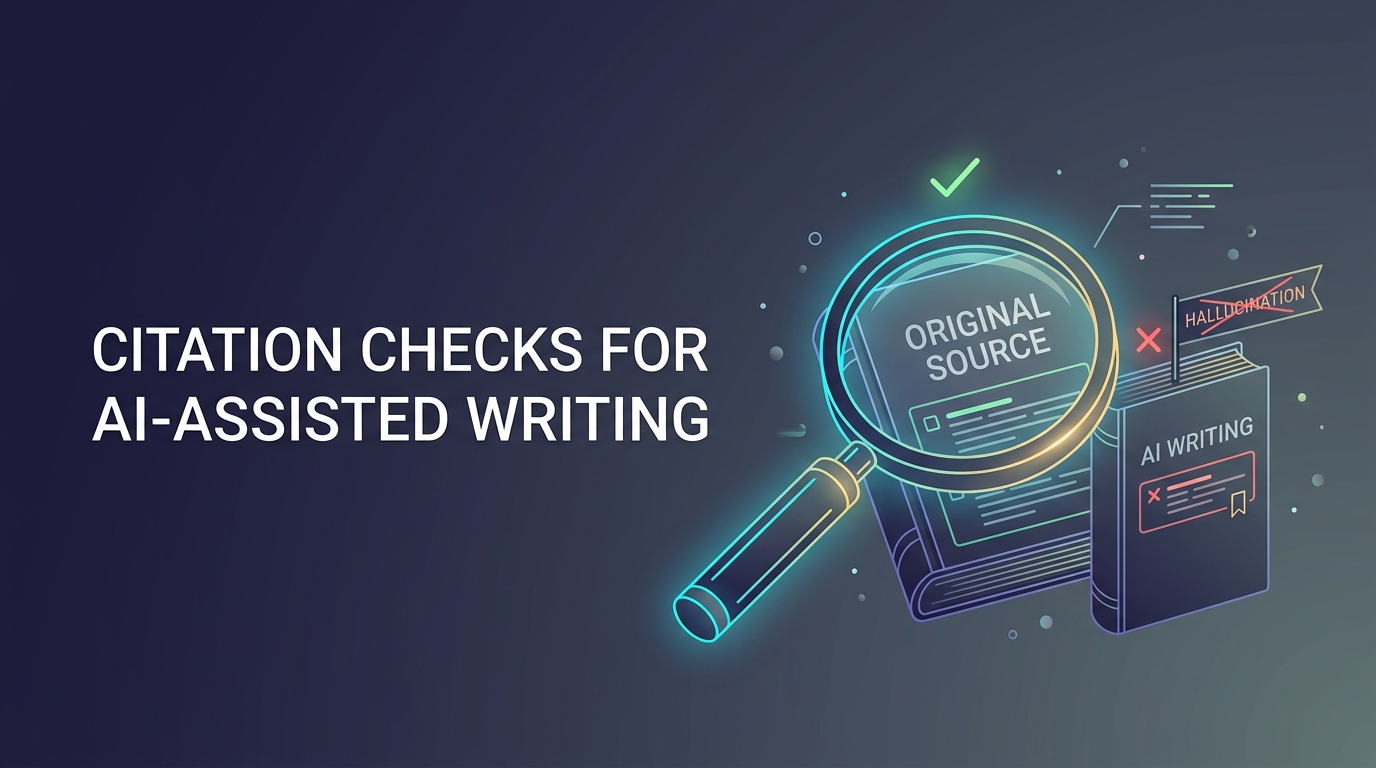
A citation-focused workflow for checking AI-assisted drafts, verifying sources, and reducing unsupported claims in research writing.
May 31, 2026
Research & Citation
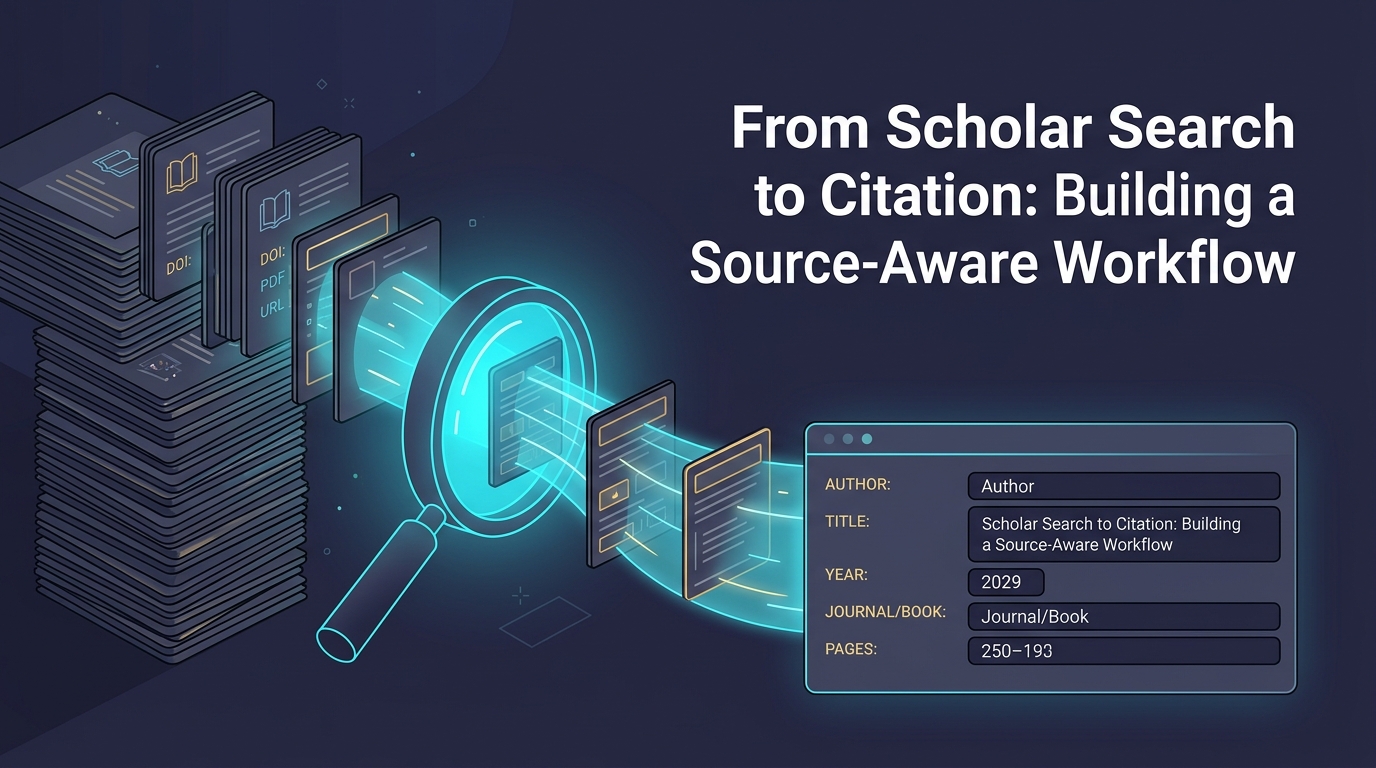
Use scholar search, summaries, and citation checks together so research writing stays grounded in real sources.
May 30, 2026