Research & Citationpublished on May 30, 2026
From Scholar Search to Citation: Building a Source-Aware Workflow
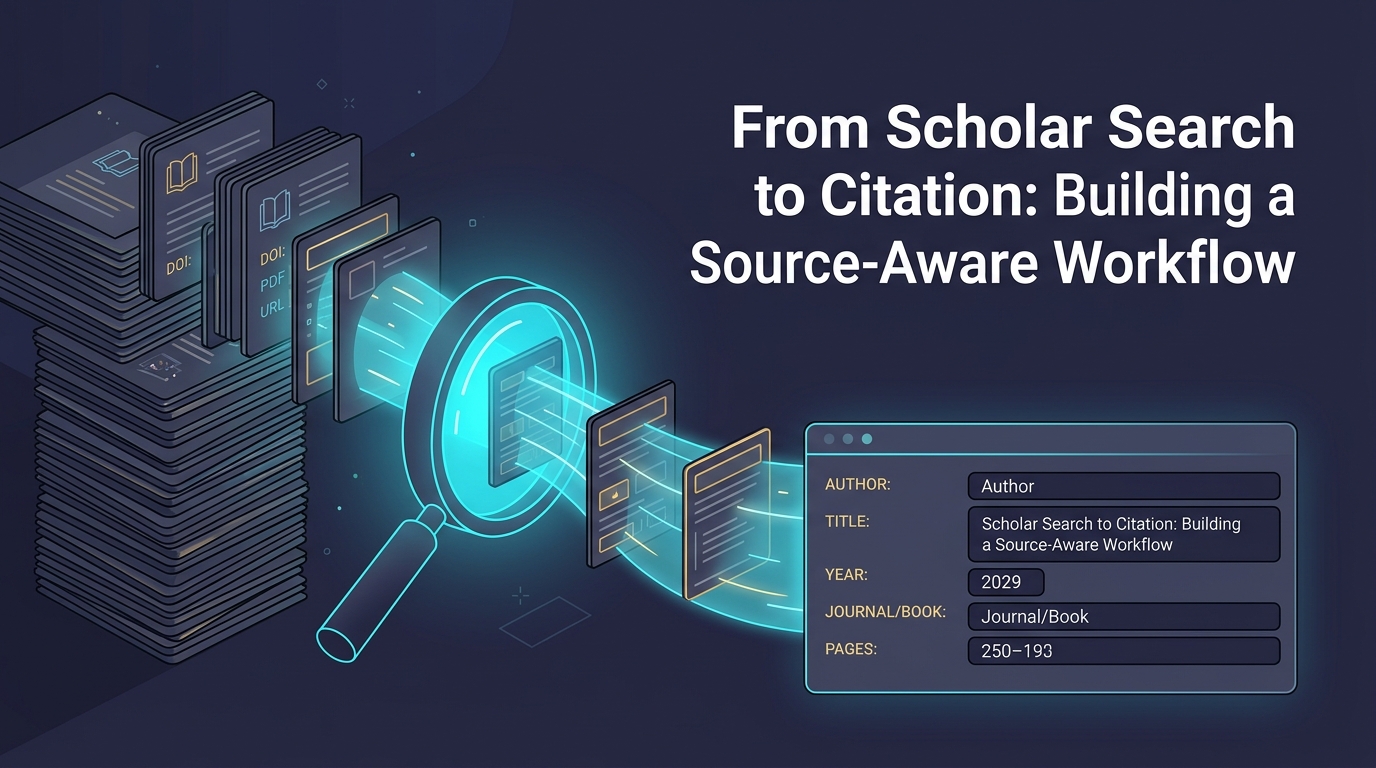
Research writing is strongest when search, reading, summarization, and citation are connected. A source-aware workflow keeps claims tied to evidence.
Search before drafting
Use Scholar Search to identify papers, years, authors, and citation signals. Save source details before writing so the draft has a reliable evidence base.
Summarize with constraints
Summaries should preserve limitations, methods, and publication context. Avoid turning a source into a generic claim.
Generate citations carefully
Citation tools are useful for formatting, but missing bibliographic fields should stay visible. GPTZeroAI treats citation generation as support for review, not as a source of invented data.
Connect sources to originality review
A strong research workflow links search, reading, citation, and authorship review. Use Scholar Search to collect candidate sources, Citation Generator to format references, and AI Detector to review the final prose for originality-risk signals.
Quality checks before publishing or submitting
- Confirm that cited sources support the claim being made.
- Remove placeholder references and invented citations.
- Separate source summaries from original analysis.
- Keep notes that explain how AI assistance was reviewed.
Frequently Asked Questions
Can a citation generator invent fake sources?
Citation generators format references but can produce incomplete or incorrect entries when bibliographic fields are missing. Always verify the author, year, title, and publication details against the original source before trusting a generated citation.
Should I run my research paper through an AI detector before submitting?
Reviewing your final prose with an AI Detector helps you spot originality-risk passages, especially if you used AI assistance while drafting. Treat the result as a signal to revise and document your process, not as a verdict on your integrity.
How do I summarize a paper without losing important context?
Keep the methods, sample size, and stated limitations in your summary instead of reducing the study to a single broad claim. This preserves the nuance you need to cite the source accurately later.
What is the right order for a source-aware research workflow?
Search and save sources first, summarize each one with its constraints, generate and verify citations, then review the finished draft for originality risk. Connecting these steps keeps every claim tied to real evidence.
Share
Related Posts
Research & Citation
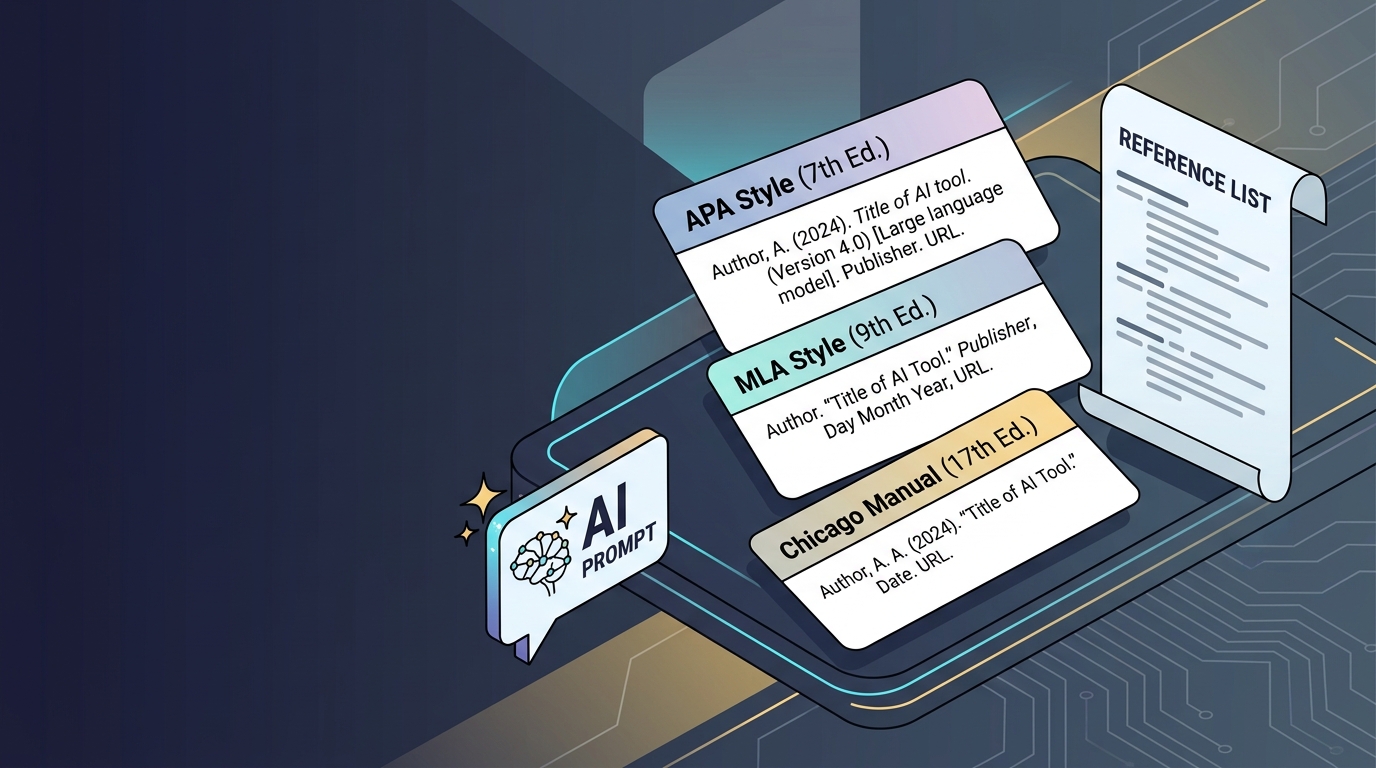
When you use ChatGPT, Claude, or Gemini in your work, you need to cite it. Here are correct APA, MLA, and Chicago formats with examples.
Jun 24, 2026
Research & Citation
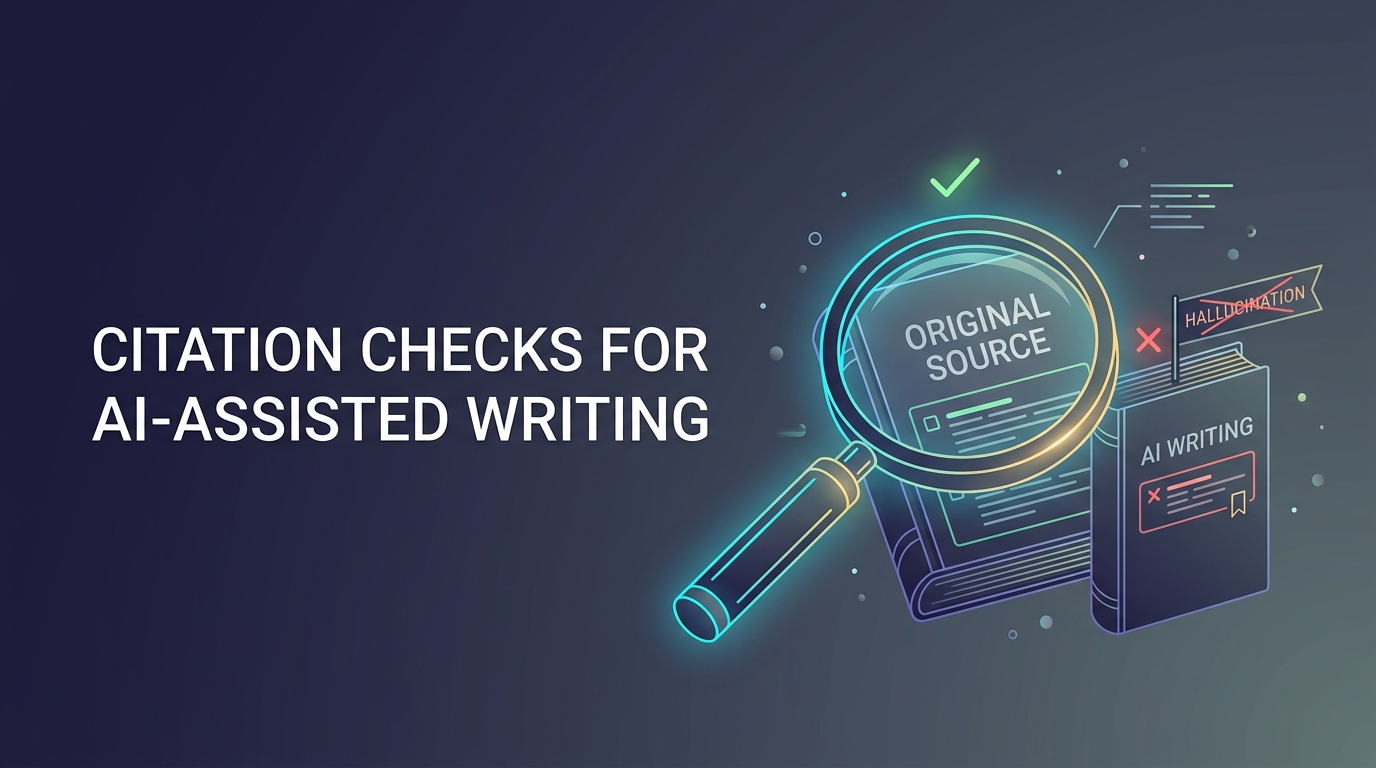
A citation-focused workflow for checking AI-assisted drafts, verifying sources, and reducing unsupported claims in research writing.
May 31, 2026