AI Humanizerpublished on May 31, 2026
How to Humanize AI Text Responsibly
Humanizing should improve the writing
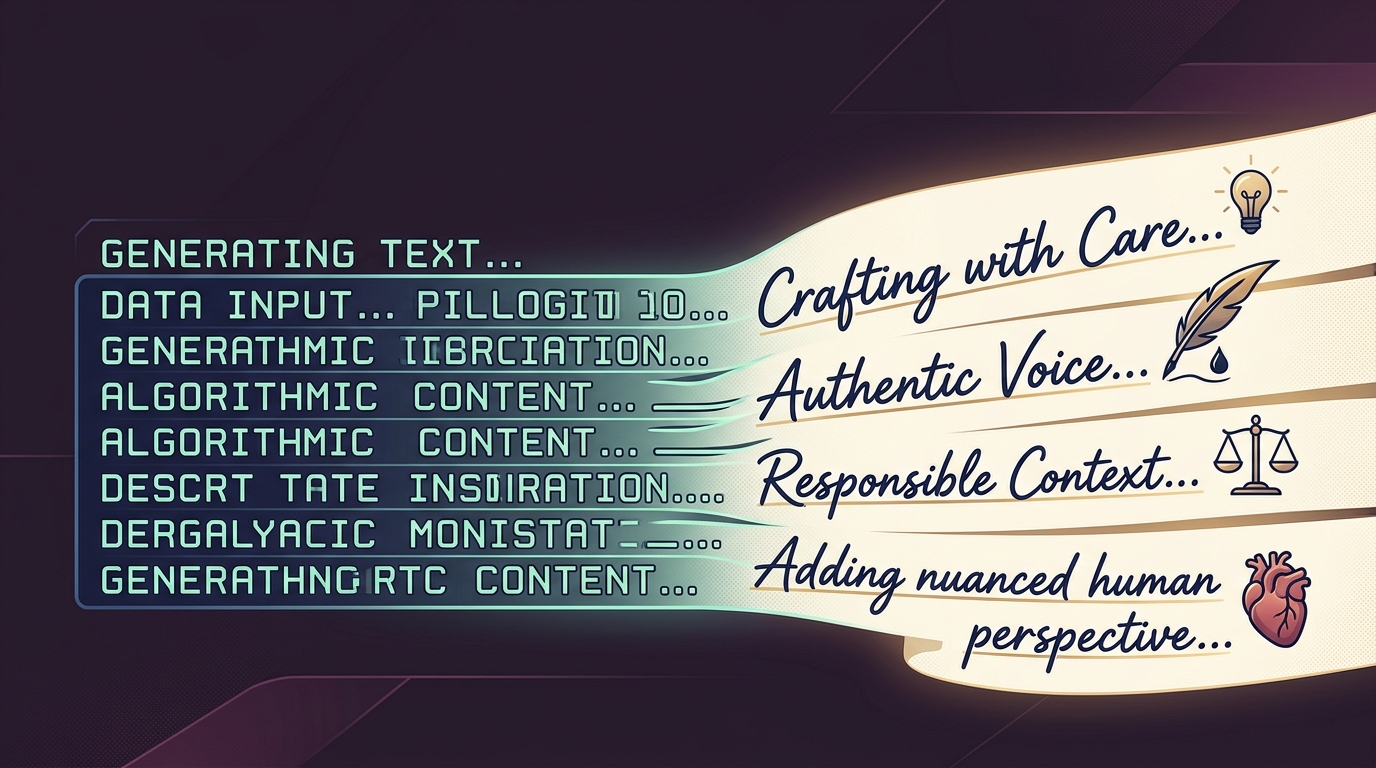
Responsible humanizing is not about hiding AI use. It is about turning a generic AI draft into accurate, useful, and accountable writing. That means adding real examples, checking claims, clarifying the argument, and making the voice fit the author or organization.
Use humanize AI text for the main workflow, then compare guardrails with responsible AI humanizer. If the task is mainly rewriting, review AI humanizer vs paraphrasing and the AI humanizer tool.
A safer editing checklist
Replace vague claims with specific evidence. Remove unsupported statistics. Add author perspective where appropriate. Keep citations attached to factual claims. If a policy requires disclosure, write a short note explaining how AI assisted the draft.
What to avoid
Avoid workflows that promise to bypass AI detection. That framing creates trust risk for schools, publishers, and teams. Better positioning is originality-aware revision: make the text clearer, more accurate, and more visibly connected to real human judgment.
FAQ
Is humanizing the same as hiding AI use?
No. The responsible version improves substance, evidence, structure, and voice. It should not be marketed as a way to deceive reviewers or bypass integrity systems.
What makes a humanized draft stronger?
Specific examples, verified facts, clear ownership of opinions, and citations make the draft stronger. The text should become more useful to the reader, not merely less detectable.
When should AI use be disclosed?
Follow the relevant school, publisher, employer, or client policy. When in doubt, a short disclosure about drafting or editing assistance is usually safer than silence.
Frequently Asked Questions
Is using an AI humanizer cheating?
It depends on how you use it and what your school, publisher, or employer allows. Editing an AI draft to add real evidence, judgment, and your own voice is legitimate writing work, but using a humanizer to disguise authorship and evade an integrity policy crosses the line.
Will responsibly humanized text still be flagged by AI detectors?
It might, because detectors estimate the probability that text was machine-generated rather than verifying authorship. The goal of responsible humanizing is not a clean detector score but writing that is more accurate, original, and clearly shaped by human judgment.
How do I disclose AI assistance in my writing?
Add a short, honest note describing how AI helped, such as drafting an outline or rewriting a section, and follow the specific policy of your school, publisher, employer, or client. When no policy exists, brief disclosure is usually safer than staying silent.
What is the difference between humanizing and paraphrasing AI text?
Paraphrasing mainly reshuffles wording to say the same thing differently, while responsible humanizing improves the substance by adding examples, verifying facts, and clarifying the argument. One changes the surface; the other strengthens the content and accountability.
Share
Related Posts
AI Humanizer
Responsible humanizing means improving clarity and authenticity, not evading detection. Learn the edits that hold up and the shortcuts that get flagged.
Jun 24, 2026

AI Humanizer
How marketers and editors can review Jasper-assisted drafts, brand voice, SEO quality, and disclosure before publishing.
May 31, 2026

AI Humanizer
How marketing teams can review AI-assisted SEO drafts, outsourced content, and brand copy with detection, evidence, and responsible revision.
May 31, 2026