AI Humanizerpublished on May 31, 2026
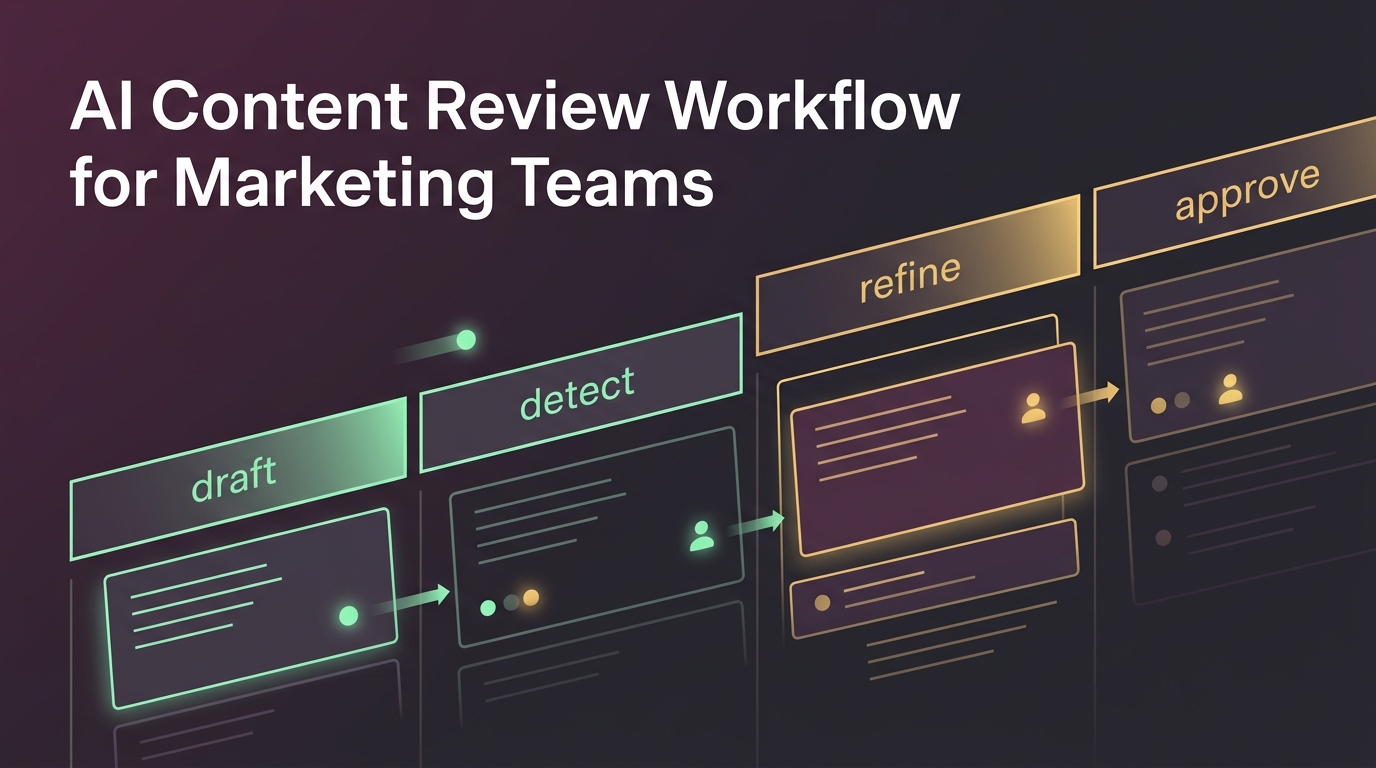
AI Content Review Workflow for Marketing Teams
Marketing teams need quality-first AI review
AI-assisted marketing drafts can be useful, but they often become generic, weakly sourced, or off-brand. Detection helps teams find which passages need stronger examples, clearer claims, or a human point of view.
Start with marketing content review, then connect the workflow to AI detector for marketing teams and responsible AI humanizer.
Workflow
Scan the draft. Review flagged passages. Check sources and examples. Rewrite weak sections with real audience insight. Document whether AI assistance was disclosed or allowed by the content policy.
FAQ
Should marketers humanize AI text?
They should improve quality, evidence, and voice. Humanizing should not be positioned as bypassing detection.
What should SEO teams watch for?
Watch for generic advice, unsupported claims, repeated structure, and missing first-hand detail.
Review checklist
For each marketing draft, check the target reader, the search intent, the claim evidence, the brand voice, and the revision history. If a passage is flagged, ask whether it is generic, unsupported, or simply written in a common template. The right fix may be better examples, not just different wording.
This makes AI content review useful for SEO, conversion, and brand trust at the same time.
Frequently Asked Questions
How often do AI detectors flag human-written marketing copy as AI?
False positives happen most with formulaic, template-driven copy, so treat any flag as a prompt to review the passage rather than as proof. Always confirm with the draft's edit history and the writer's input before acting on a single score.
Where does AI content review fit in a marketing publishing workflow?
Run the detection scan after the first draft and before editorial sign-off, so flagged passages can be strengthened during normal revision. This keeps review part of quality control instead of a last-minute gate that delays publishing.
Does using AI for SEO drafts hurt Google rankings?
Google rewards helpful, original content regardless of how it was produced, but generic AI text that lacks first-hand insight tends to underperform. Detection helps you find those thin passages so you can add real evidence and experience before publishing.
What content policy should a marketing team set for AI assistance?
Define when AI drafting is allowed, require disclosure in the revision history, and set a quality bar covering sources, examples, and brand voice. A clear policy lets the team use AI productively while keeping accountability and trust intact.
Share
Related Posts
AI Humanizer
Responsible humanizing means improving clarity and authenticity, not evading detection. Learn the edits that hold up and the shortcuts that get flagged.
Jun 24, 2026

AI Humanizer
How marketers and editors can review Jasper-assisted drafts, brand voice, SEO quality, and disclosure before publishing.
May 31, 2026
AI Humanizer
A responsible approach to humanizing AI-assisted text by improving clarity, evidence, voice, and disclosure instead of hiding authorship.
May 31, 2026