Academic Writingpublished on Jun 24, 2026
AI Detection for Teachers: A Classroom Policy Playbook
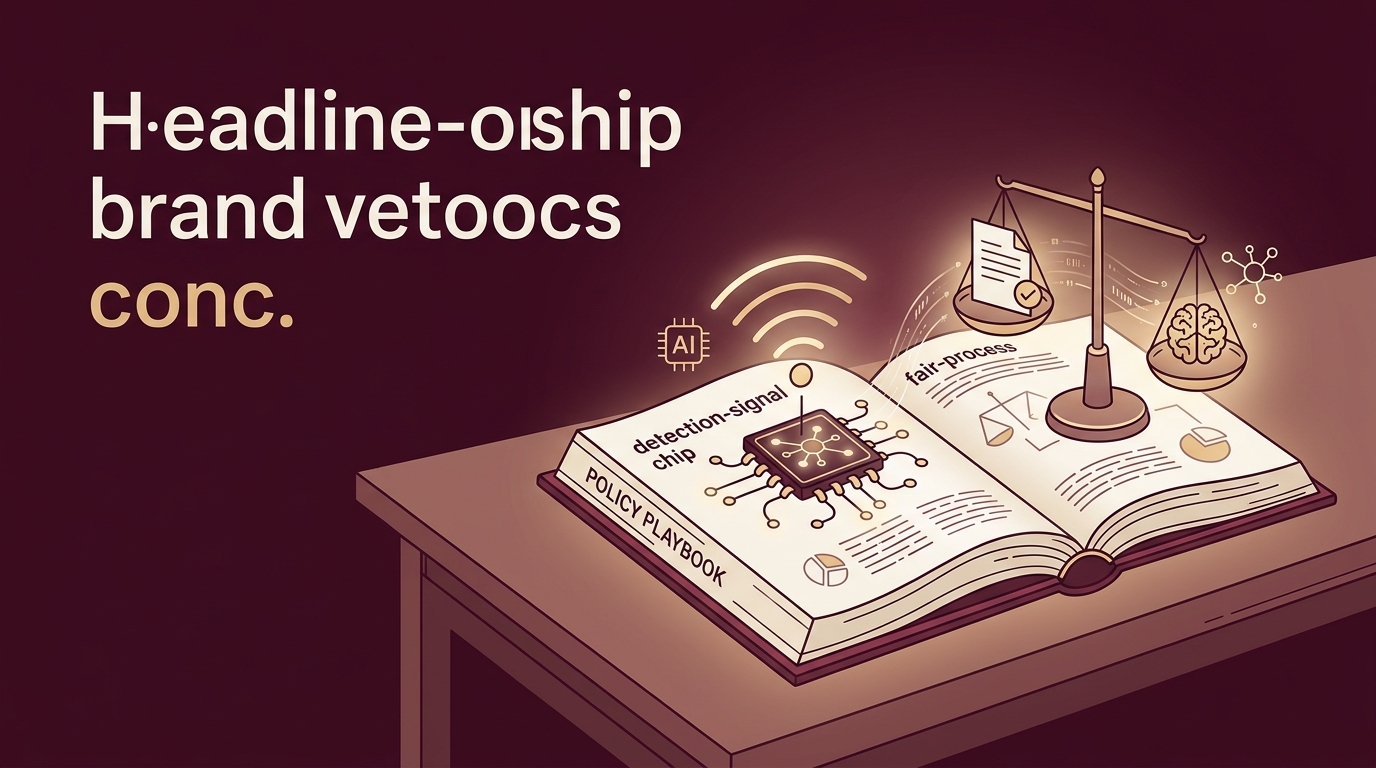
AI detection is most useful in the classroom when it sits inside a clear, written policy. A score on its own does not prove misconduct, and treating it that way puts students and teachers at risk. This playbook covers how to set expectations, read results responsibly, and keep the process fair when a flag appears.
Write the policy before you use the tool
Students should know the rules before the first assignment, not after a flag. A good policy states what AI use is allowed, what must be disclosed, and what counts as a violation. Ambiguity is where most disputes begin, so put it in writing.
- Define permitted, restricted, and prohibited AI use per assignment type.
- Explain that a detector score is a signal, not a verdict.
- Describe the review steps that follow a flagged submission.
- State the student's right to respond before any consequence.
Read the report, not just the number
A percentage is a starting point. The useful work happens when you compare flagged passages against drafts, citations, and prior writing. GPTZeroAI surfaces signals such as low sentence variation and repetitive phrasing so you can see where to look more closely, rather than handing down a single number. To understand those signals, review the methodology behind the tool and run essays through the AI detector for essays as one input among several.
Protect due process
No academic decision should rest on a detector alone. Give students a chance to explain their process and show version history. False positives are real, especially for English-language learners, neurodivergent writers, and heavily edited work. A fair process assumes good faith and asks questions before it assigns blame.
Keep records
Document the assignment context, the signals you saw, the evidence you reviewed, and the outcome. Consistent records protect students from arbitrary decisions and protect teachers from claims of bias.
Design the conversation
When you raise a concern, frame it as a review, not an accusation. Ask the student to describe their approach, then compare it with the evidence. Most cases resolve here, and the rest will be far better documented for any formal process that follows.
Make the policy a teaching moment
The strongest AI policies teach integrity rather than only police it. Talk openly about when AI helps and when it short-circuits learning. Use the AI Detector as a shared reference point, so students see it as a transparent tool rather than a hidden trap.
Frequently Asked Questions
Can I fail a student based only on an AI detector score?
No. A score is a signal, not proof. Any academic consequence should follow a documented review that includes student input, draft history, and other evidence, with clear due process.
What causes false positives?
Formulaic prompts, heavily edited drafts, translated text, and the writing of English-language learners or neurodivergent students can all raise scores. That is why human review and a chance to respond matter.
How should I introduce the policy to students?
Share it before the first assignment in plain language. Explain permitted AI use, what must be disclosed, and the review steps after a flag, so expectations are clear from day one.
Is AI detection still worth using?
Yes, when used as one input in a fair workflow. It helps you decide where to look more closely. Paired with drafts, conversation, and clear policy, it supports integrity without replacing judgment.
Share
Related Posts
Academic Writing
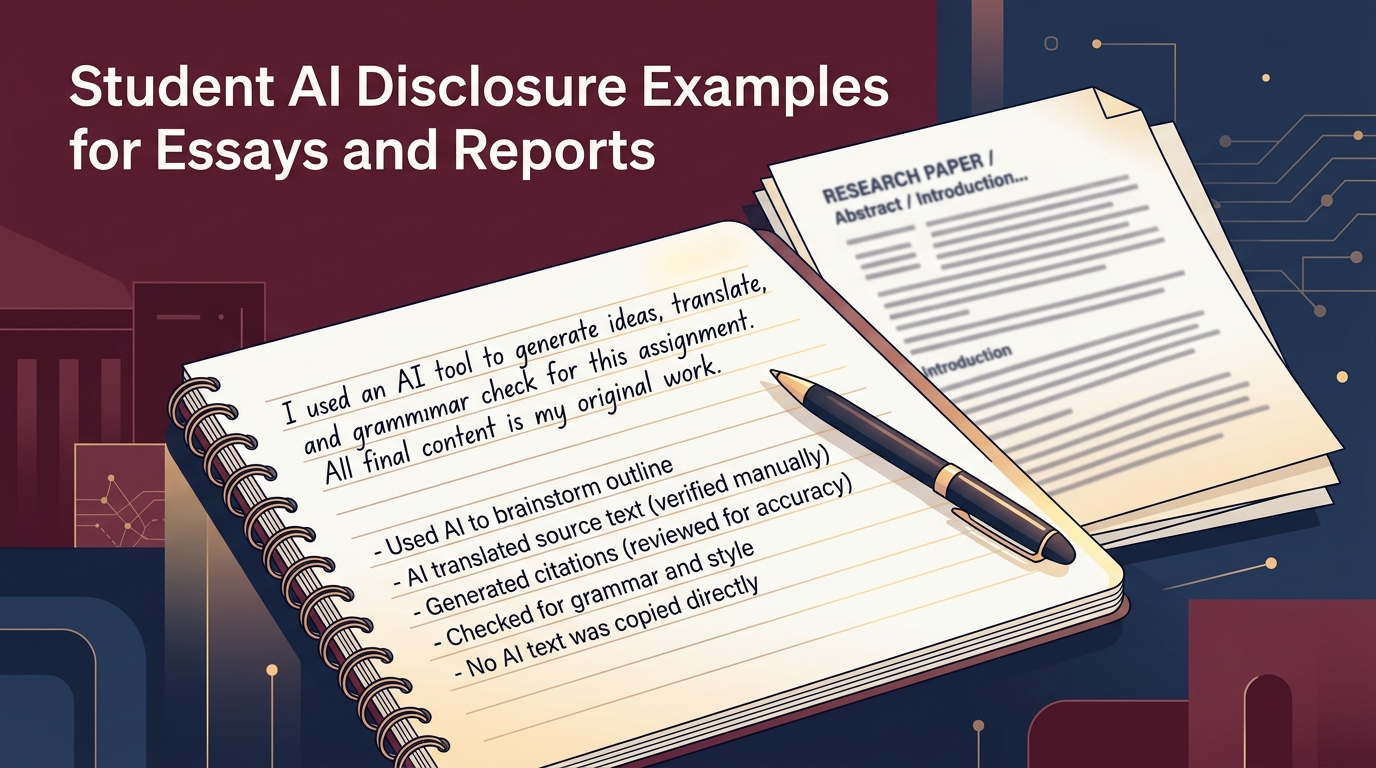
Examples of student AI disclosure statements for brainstorming, outlines, grammar review, translation, citation support, and draft revision.
May 31, 2026

Academic Writing
A practical AI detection policy template covering allowed AI use, disclosure, evidence review, false positives, appeals, and documentation.
May 31, 2026
Academic Writing
A practical checklist for universities designing AI detection policies, disclosure rules, review steps, and student-centered appeals.
May 31, 2026