
AI Detectionpublished on Jun 24, 2026
AI Detector Accuracy: False Positives and How to Avoid Them
No AI detector is perfect, and accuracy claims should always be read with care. A false positive, human writing flagged as AI, is the error that does the most damage, because it can put an honest writer under suspicion. Understanding why false positives happen is the first step to avoiding them.
What detector accuracy actually means
Accuracy is usually reported as a single percentage, but that number hides two error types. A false positive wrongly flags human text, while a false negative misses genuine AI text. A detector tuned to catch more AI tends to raise more false positives, and the reverse trade-off applies too. No single threshold removes both risks at once.
For this reason, GPTZeroAI treats a score as a signal that points reviewers toward passages worth a closer look, not a verdict. We explain how we frame this in our detector accuracy guide.
Why false positives happen
Several kinds of legitimate writing produce patterns that resemble AI output. Knowing them helps reviewers stay fair.
- Formulaic or technical writing with consistent structure and low variation can read as machine-generated.
- Non-native English often uses simpler, more repetitive phrasing that detectors may misread.
- Heavily edited or templated text, including grammar-tool passes, can smooth away the natural variation detectors look for.
- Short samples give the model too little evidence, which widens the margin of error.
None of these mean the writer used GPT-5, Claude, or Gemini. They mean the text happens to share surface features with AI writing.
How to reduce false-positive risk
Use longer samples
Detectors are far more reliable on full documents than on a sentence or two. Where possible, analyze the complete piece rather than an isolated paragraph.
Read the evidence, not just the number
Look at which passages were flagged and why. Sentence consistency, repetition, and low variation are signals to inspect, not proof on their own. Our methodology explains what each signal represents.
Combine the score with context
Compare a flag against drafts, version history, citations, and the writer's usual voice. A single tool should never be the sole basis for a decision.
Building a fair review workflow
The most reliable defense against wrongful flags is process, not a higher accuracy number. Treat detection as one input among several, document how decisions are made, and give writers a chance to explain. For where errors cluster, see our false-positive risk research.
Putting it into practice
When you run a check with the AI Detector, record the document type, review the flagged passages, and weigh the result against drafts and sources before drawing a conclusion. Used this way, a detector becomes a review aid rather than an automatic accusation.
Frequently Asked Questions
Can an AI detector be wrong?
Yes. Every detector produces both false positives, human text flagged as AI, and false negatives, AI text marked as human. Scores should be treated as evidence to review, not as final proof.
What causes a false positive?
Formulaic or technical writing, non-native English, heavily edited or templated text, and very short samples can all share surface patterns with AI output, leading to a wrongful flag.
How can I lower the chance of a false positive?
Analyze longer, complete samples, read the flagged passages rather than only the percentage, and compare the result against drafts, citations, and the author's usual voice before deciding anything.
Should a detector score alone decide an outcome?
No. A responsible workflow treats the score as one signal among many, documents the decision process, and gives writers an opportunity to explain before any conclusion is reached.
Share
Related Posts

AI Detection
A fair, factual comparison of how Turnitin and GPTZeroAI approach AI detection, with a focus on workflow, transparency, and evidence reviewers can act on.
Jun 24, 2026
AI Detection
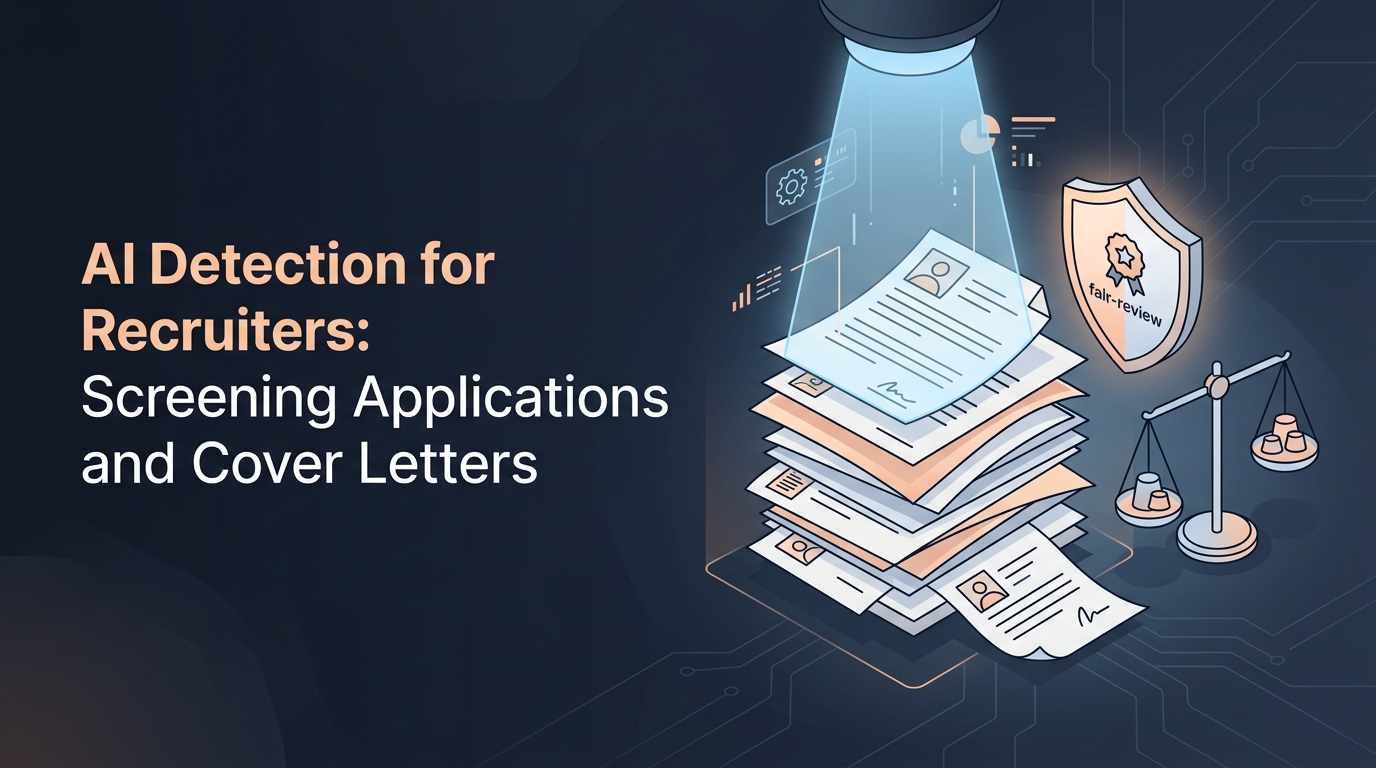
AI-assisted applications are now common. Learn how recruiters can use AI detection as a fair signal in resume and cover letter screening without auto-rejecting candidates.
Jun 24, 2026
AI Detection
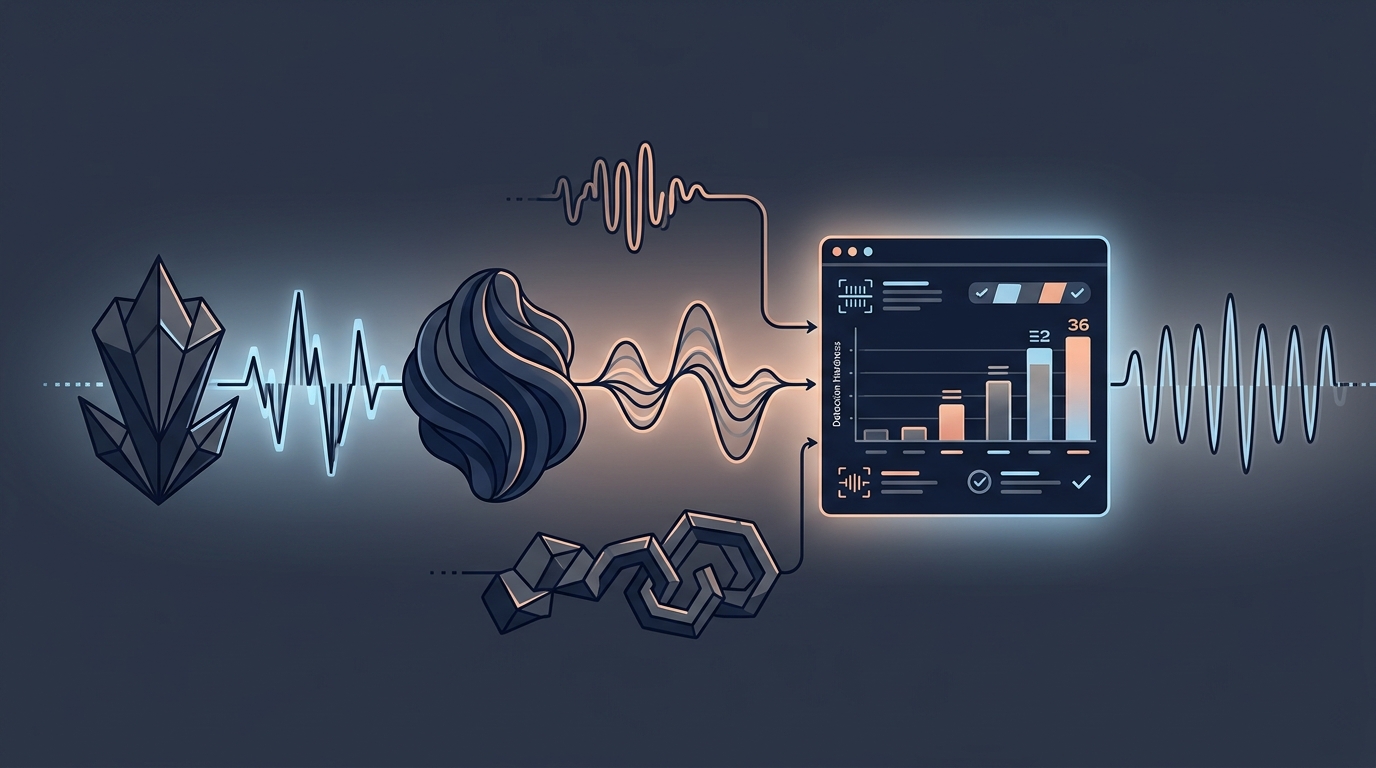
ChatGPT, Claude, and Gemini each leave different writing fingerprints. Here is what actually changes detectability, and why no model is reliably invisible.
Jun 24, 2026