Academic Writingpublished on May 30, 2026
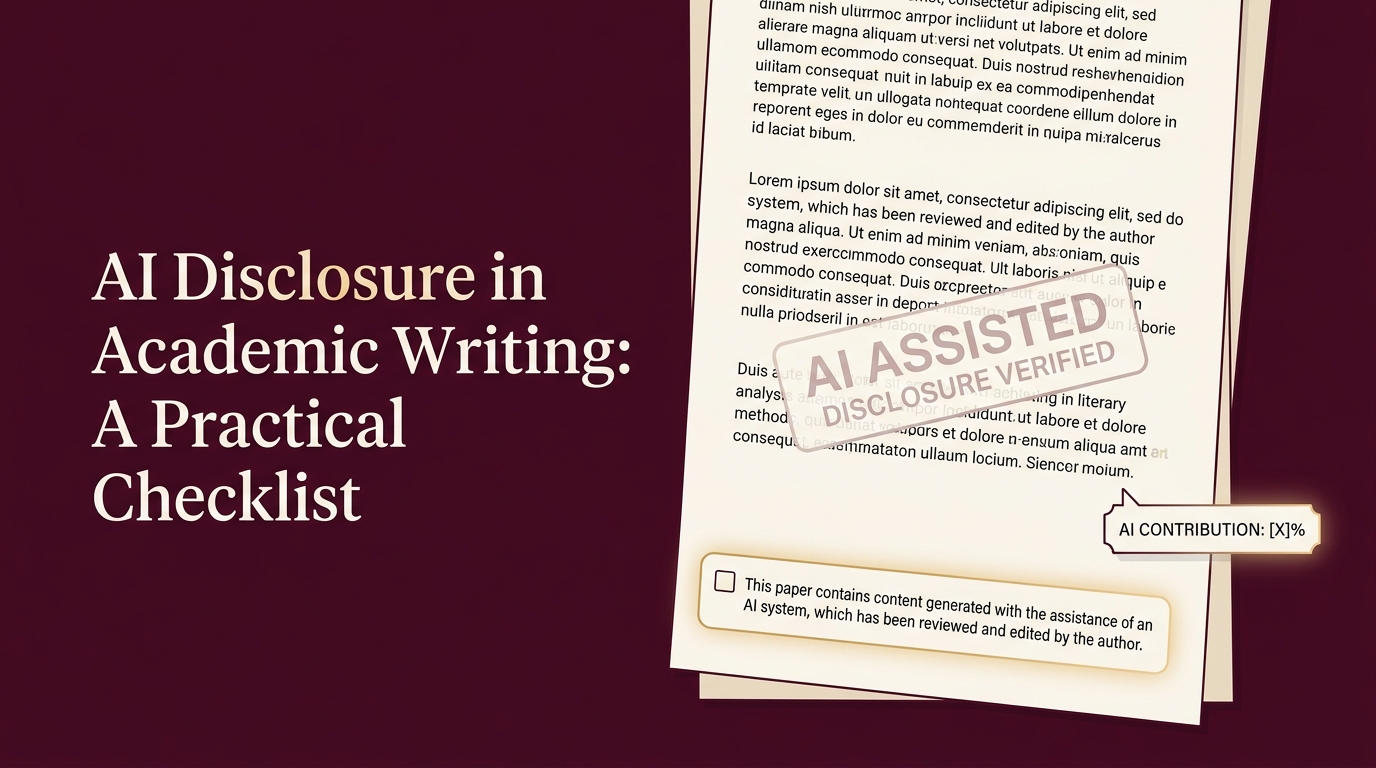
AI Disclosure in Academic Writing: A Practical Checklist
Academic AI disclosure is becoming part of everyday writing practice. The exact policy may vary by institution, but writers can still follow a consistent review checklist.
Record the type of assistance
Was AI used for brainstorming, outlining, grammar correction, translation, summarization, or drafting? Each use case has different disclosure expectations.
Protect sources and citations
AI tools can produce fluent but unsupported claims. Every citation, quotation, and factual statement should be checked against the original source.
Keep revision evidence
Draft history, notes, and source annotations help explain the writing process if questions arise. GPTZeroAI tools are best used as part of this transparent workflow.
Disclosure decisions need context
Academic AI disclosure should reflect how AI shaped the work. A spelling suggestion is different from AI-generated analysis, outlines, or paragraphs. Pair this checklist with the AI detector for essays and the false-positive risk research before making high-stakes decisions.
What to document
- Which tool was used and for what purpose.
- Whether AI changed claims, structure, wording, or sources.
- Which parts were verified by the student or author.
- What the course, journal, or institution policy requires.
Frequently Asked Questions
Do I have to disclose using AI for grammar or spelling fixes?
It depends on your institution's policy, since some treat basic grammar and spelling tools like a standard word processor while others ask you to note any AI use. When in doubt, record the tool and purpose so you can disclose it if asked.
Where should AI disclosure go in a paper?
Common placements include a methods section, an acknowledgments note, a footnote, or a separate disclosure statement, depending on the journal or course requirements. Check the specific style guide or assignment instructions before submitting.
What is the difference between AI assistance and academic misconduct?
Assistance becomes misconduct when undisclosed AI use violates a stated policy or when the AI generates substantive analysis, arguments, or sources that you present as your own. Following a disclosure checklist and verifying every claim keeps your work on the right side of that line.
How can I prove my writing process if I am questioned?
Keep your draft history, research notes, outlines, and source annotations so you can show how the work developed over time. This revision evidence, paired with clear disclosure, makes it much easier to explain how AI did or did not shape your writing.
Share
Related Posts
Academic Writing
A practical, fair-minded guide to writing classroom AI policy: treat detector scores as signals, protect due process, and build a review workflow students can trust.
Jun 24, 2026
Academic Writing
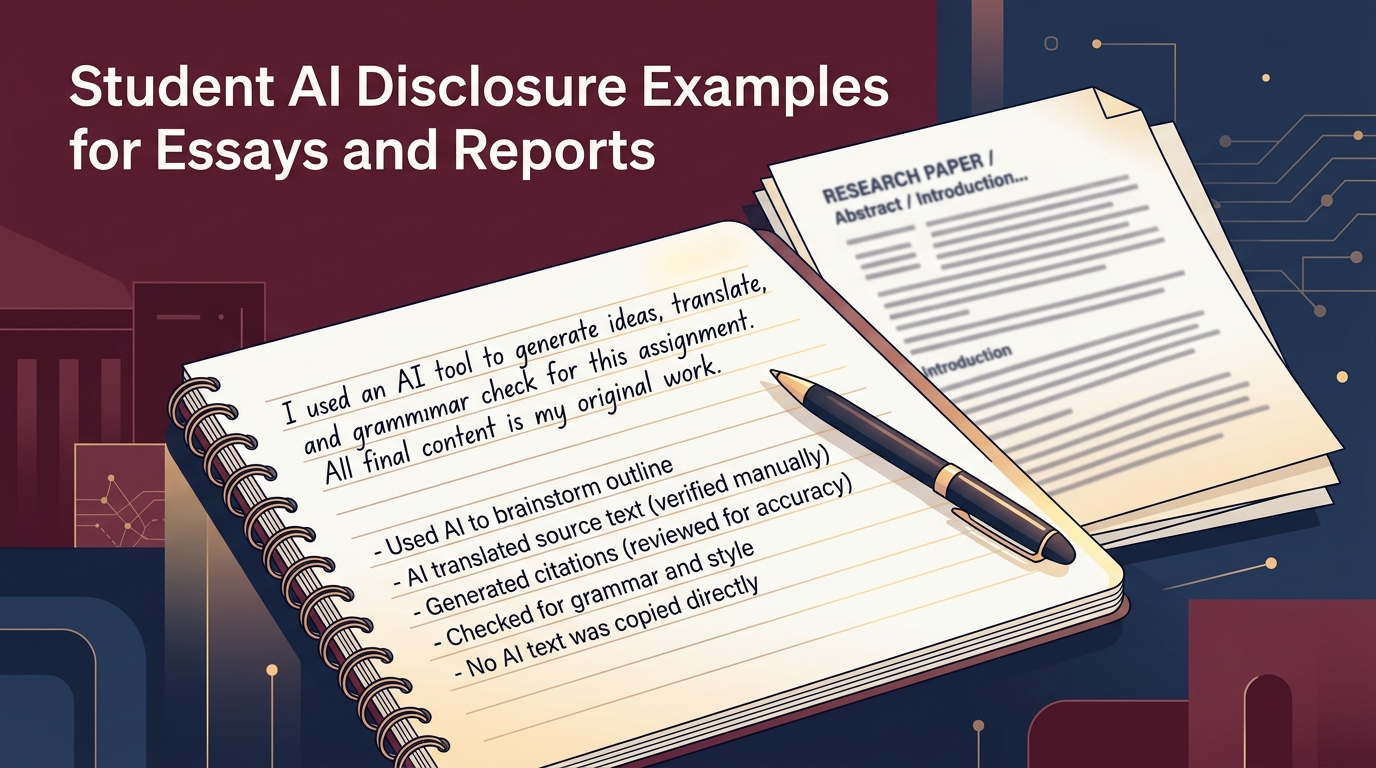
Examples of student AI disclosure statements for brainstorming, outlines, grammar review, translation, citation support, and draft revision.
May 31, 2026
Academic Writing
A practical AI detection policy template covering allowed AI use, disclosure, evidence review, false positives, appeals, and documentation.
May 31, 2026