AI Detectionpublished on May 31, 2026
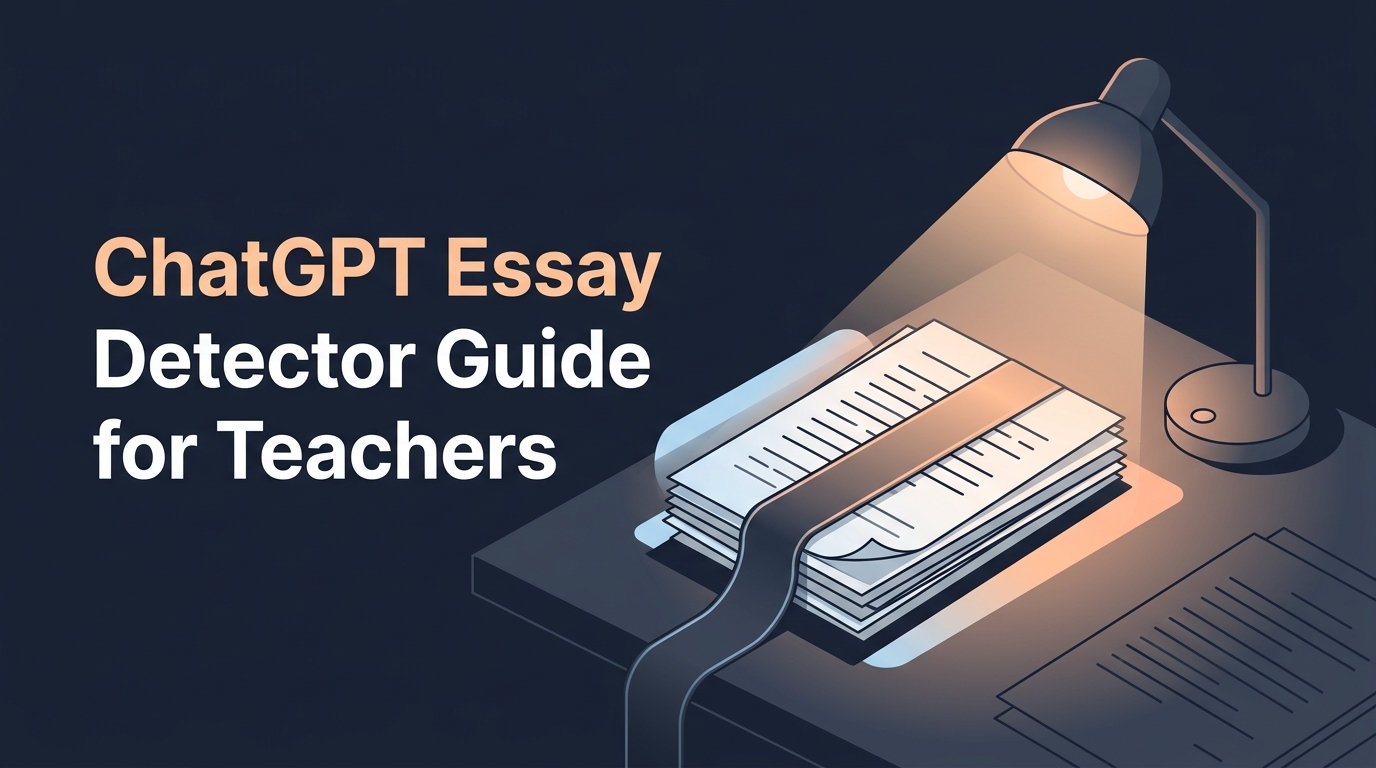
ChatGPT Essay Detector Guide for Teachers
How to review a suspected ChatGPT essay
A ChatGPT essay detector should support a writing review, not replace teacher judgment. Start with the assignment prompt, the student draft history, and any known writing samples. Then use an AI detector to identify passages that deserve closer reading.
For a fast first pass, run the draft through the AI detector tool. If the assignment is a long essay, compare the result with the dedicated AI detector for essays page so the workflow matches paragraph-level review instead of a short text check.
Signals to compare
Look for abrupt style shifts, generic evidence, missing citations, and unusually even sentence rhythm. A score alone is not enough. A strong workflow combines detector output, rubric evidence, draft history, and a short student conversation.
Teachers can also review the broader question of whether teachers can detect ChatGPT and use the ChatGPT essay detector landing page when they need a student-friendly explanation of the process.
Responsible next steps
Document what was checked, which passages looked unusual, and what non-punitive follow-up was offered. The best outcome is often revision, citation repair, or a conversation about acceptable AI assistance rather than an immediate misconduct claim.
FAQ
Can a teacher use this as the only evidence?
No. The detector result should be one signal in a documented review. Pair the score with draft history, rubric fit, citation quality, and a student explanation. This protects both academic integrity and fair process.
What should be saved after review?
Save the submitted text, the result date, the passages reviewed, and the action taken. If the student revises, keep the revised draft too. A clear trail makes the decision easier to explain later.
Where should the reader go next?
For shorter checks, use the general detector. For long assignments, use essay-specific guidance and teacher policy pages so the process matches the risk of the decision.
Frequently Asked Questions
How accurate are ChatGPT essay detectors?
No detector is perfect, and results are best read as a probability rather than a verdict. Accuracy can drop on short passages, heavily edited text, or writing by non-native English speakers, which is why a score should always be confirmed with draft history and a student conversation.
Can a student dispute an AI detection result?
Yes, and a fair process should allow it. Let the student walk you through their draft history, sources, and writing choices, and treat that explanation as real evidence alongside the detector score.
Does paraphrasing or a humanizer tool fool an essay detector?
It can lower a score, but it often leaves other signals such as generic evidence, missing citations, or style shifts that a careful reading still catches. Because of this, never rely on a single detector pass; combine it with rubric review and draft comparison.
Is it fair to require students to disclose AI use?
Many schools find a clear disclosure policy fairer than detection alone, because it sets expectations up front. Stating which AI assistance is allowed, and asking students to note where they used it, reduces disputes and keeps the focus on learning.
Share
Related Posts

AI Detection
A fair, factual comparison of how Turnitin and GPTZeroAI approach AI detection, with a focus on workflow, transparency, and evidence reviewers can act on.
Jun 24, 2026
AI Detection
AI-assisted applications are now common. Learn how recruiters can use AI detection as a fair signal in resume and cover letter screening without auto-rejecting candidates.
Jun 24, 2026
AI Detection
ChatGPT, Claude, and Gemini each leave different writing fingerprints. Here is what actually changes detectability, and why no model is reliably invisible.
Jun 24, 2026