Academic Writingpublished on May 31, 2026
Teacher AI Detection Workflow
A fair workflow for classroom AI detection
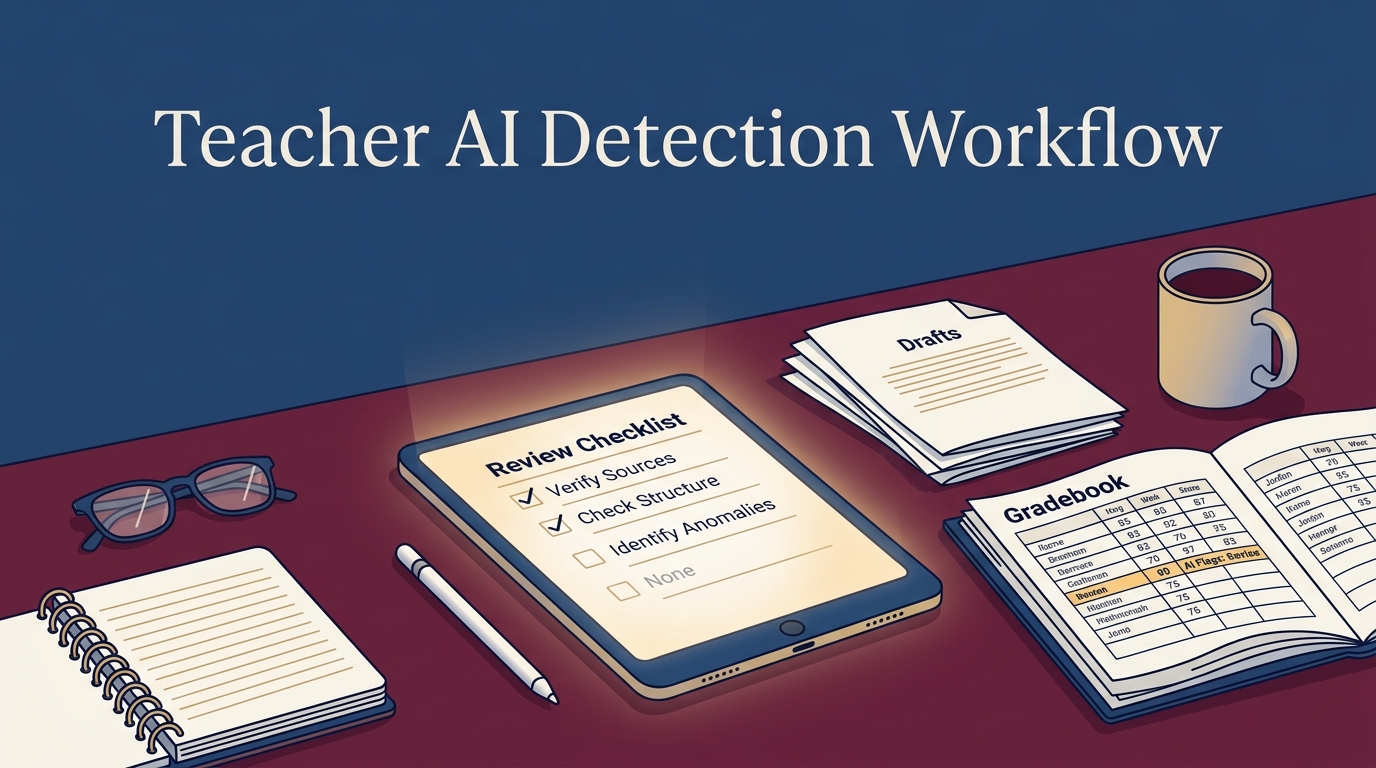
Teachers need a process that is consistent, explainable, and centered on learning. The workflow should start before detection: define acceptable AI use, explain disclosure rules, and save draft checkpoints when possible.
For tool selection, review AI detector for teachers and best AI detector for teachers. For policy context, use AI detection in schools 2026.
Step-by-step review
First, run the text through a detector and note high-risk passages. Second, compare those passages with previous writing, outlines, notes, and cited sources. Third, ask the student to explain the writing process. Fourth, decide whether revision, disclosure repair, or formal escalation is appropriate.
Documentation matters
Keep a short record of the prompt, submitted draft, detector result, reviewed passages, and student response. This reduces inconsistent handling and gives students a clearer path to improve their writing practice.
FAQ
Should schools publish an AI detection policy?
Yes. Students and teachers need shared expectations before a dispute happens. A good policy defines allowed assistance, disclosure language, review steps, and appeal options.
How can teachers reduce conflict?
Use the same workflow for similar cases, explain the evidence, and offer a revision path when appropriate. Consistency is the best defense against arbitrary enforcement.
What belongs in a classroom checklist?
Include assignment rules, draft checkpoints, detector result, reviewed passages, citation review, student explanation, and final action. Keep the checklist short enough to use during real grading.
Frequently Asked Questions
Can an AI detector result alone prove a student used AI?
No. Detector scores indicate probability, not proof, and should be treated as a flag that opens a conversation rather than a verdict. Pair the result with drafts, version history, and the student's explanation before reaching any conclusion.
How should a teacher handle a false positive?
Treat a high score as a question, not an accusation, and let the student show their writing process through outlines, notes, or revision history. If the evidence supports original work, document that the case was reviewed and cleared so the record stays fair.
What is a fair AI use policy for students with disabilities or English learners?
A fair policy distinguishes between approved assistive support, such as grammar or translation aids, and undisclosed AI authorship. Spell out which tools are allowed and require simple disclosure so accommodations are never mistaken for misconduct.
How long should teachers keep AI detection records?
Keep records at least until the grading appeal window for that term closes, and longer if your school's academic-integrity policy requires it. Store the prompt, draft, detector result, and student response together so any later review has full context.
Share
Related Posts

Academic Writing
A practical, fair-minded guide to writing classroom AI policy: treat detector scores as signals, protect due process, and build a review workflow students can trust.
Jun 24, 2026
Academic Writing
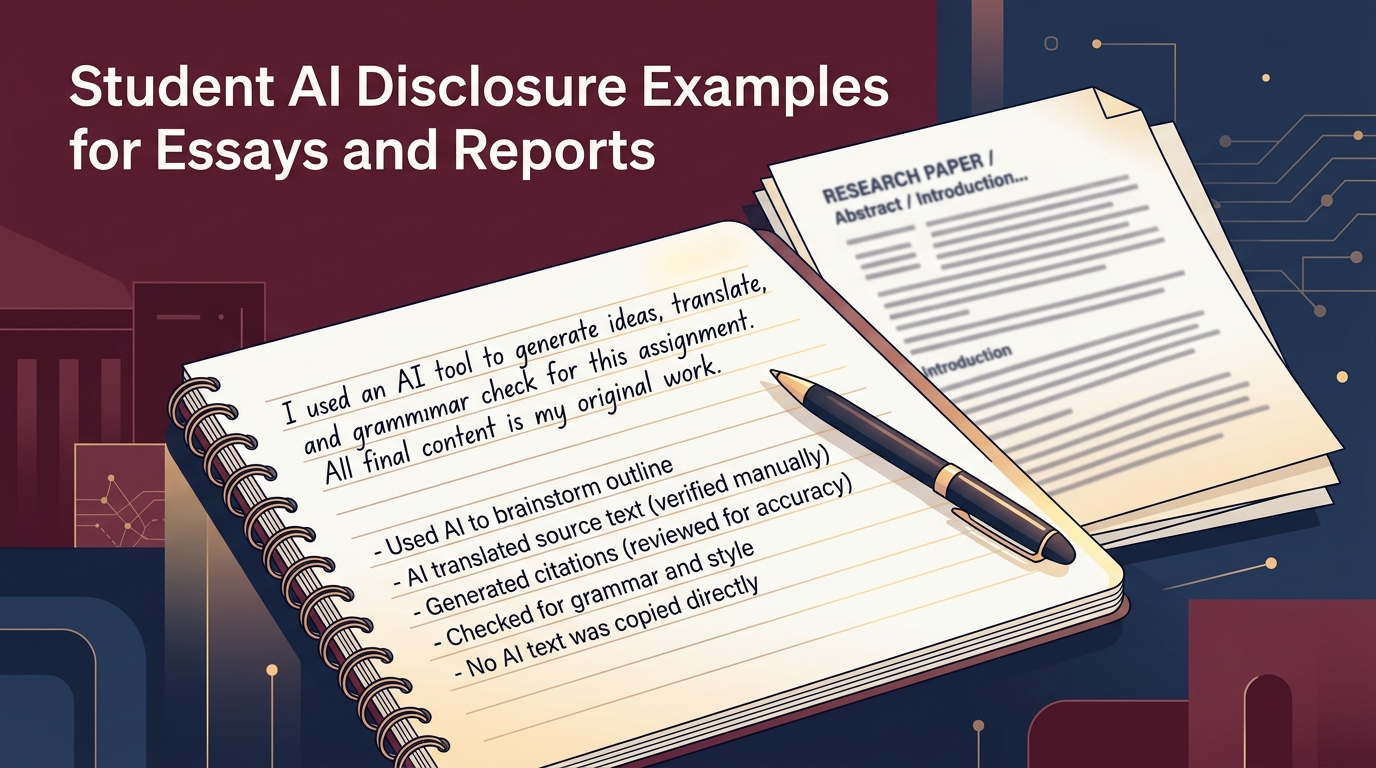
Examples of student AI disclosure statements for brainstorming, outlines, grammar review, translation, citation support, and draft revision.
May 31, 2026

Academic Writing
A practical AI detection policy template covering allowed AI use, disclosure, evidence review, false positives, appeals, and documentation.
May 31, 2026